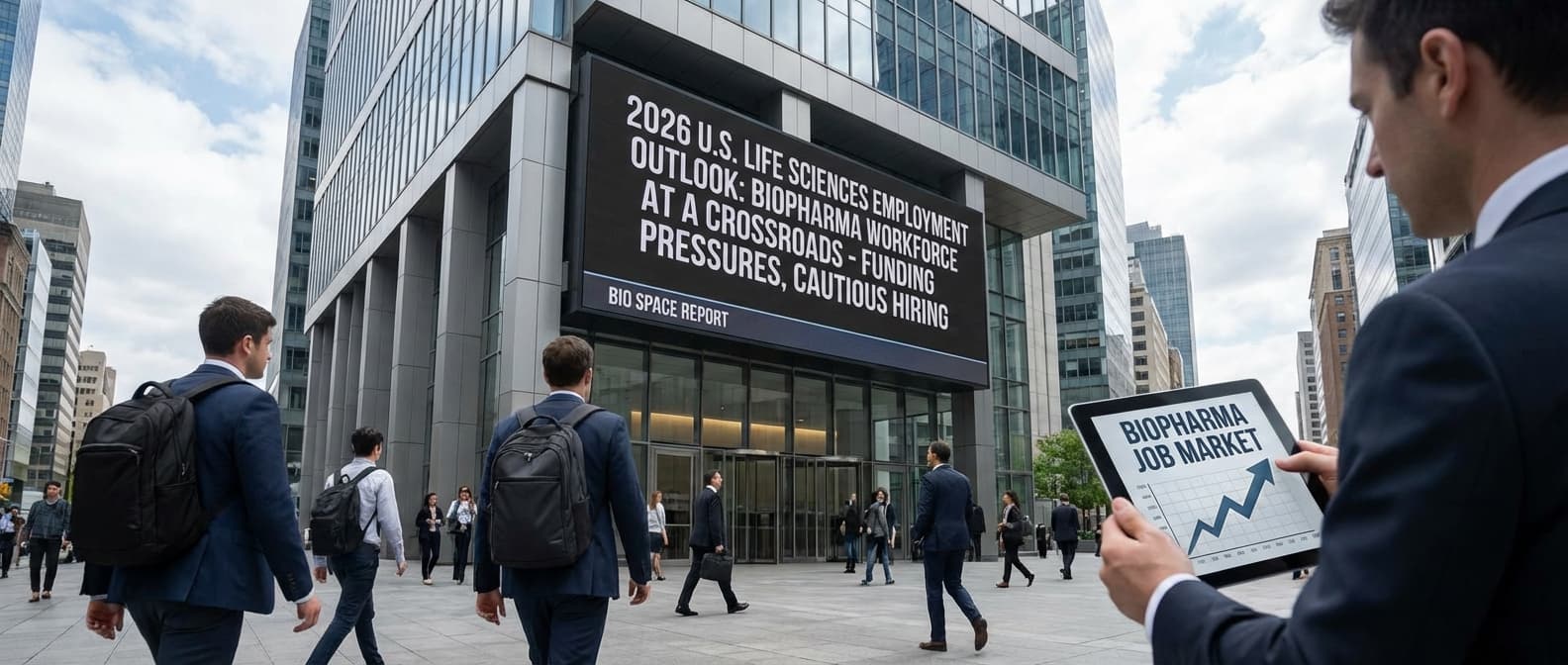
2026 U.S. Life Sciences Employment Outlook: Biopharma Workforce at a Crossroads Amid Funding Challenges

The BioSpace 2026 Employment Outlook analyzes the current employment trends in the U.S. life sciences sector amid ongoing financial uncertainties. Despite structural pressures from funding constraints and workforce reductions, there are indicators signaling a possible stabilization in hiring and workforce dynamics for the upcoming year.
The U.S. life sciences sector is a pivotal component of the broader healthcare ecosystem, encompassing biopharmaceuticals, medical devices, research institutions, and support industries. As of early 2026, the employment landscape within this sector presents a mixed picture characterized by several concurrent pressures and emerging opportunities.
According to BioSpace's 2026 U.S. Life Sciences Employment Outlook, the sector continues to experience significant headwinds driven primarily by constrained funding environments. Investment slowdowns and cautious capital expenditure have translated into a tightening labor market. This contraction has led to elevated levels of layoffs across various biotech and pharmaceutical companies, reflecting a strategic recalibration aimed at sustainability amidst uncertain market conditions.
Layoffs have unfortunately affected a broad range of roles including research scientists, clinical trial staff, and operational personnel. However, despite these challenges, the report notes an emerging trend towards cautious hiring. Certain organizations are beginning to replenish and diversify their talent pools, especially in areas aligned with cutting-edge therapeutic development and digital health innovation.
It is important to recognize that these dynamics are occurring in the context of a larger shift in biopharma industry priorities. Increasingly, companies are focusing on precision medicine, gene therapies, and AI-driven drug discovery platforms which require specialized, highly skilled professionals. Consequently, while some segments contract, others might witness talent demand growth.
Analysts and industry watchers quoted within the report express a sentiment of 'cautious optimism' for 2026. This suggests that while immediate financial and operational constraints persist, the sector's foundational strengths remain robust. New funding mechanisms, public-private partnerships, and the ongoing pipeline of innovative therapies provide a basis for potential recovery and growth.
Workforce development initiatives, employee retention strategies, and reskilling programs are expected to play a critical role in navigating this period. Companies that can strategically deploy human capital in alignment with emerging scientific trends are anticipated to gain competitive advantage in the medium to long term.
In summary, the BioSpace 2026 Employment Outlook provides a comprehensive assessment of the state of the U.S. life sciences workforce. It underscores the sector's navigation through turbulent times while signaling potential pathways to stabilization and renewed growth. Stakeholders are advised to remain vigilant and adaptive as the employment landscape evolves.
For more detailed insights, visit the BioSpace report here: https://www.biospace.com/report-2026-employment-outlook
Join the BioIntel newsletter
Get curated biotech intelligence across AI, industry, innovation, investment, medtech, and policy—delivered to your inbox.