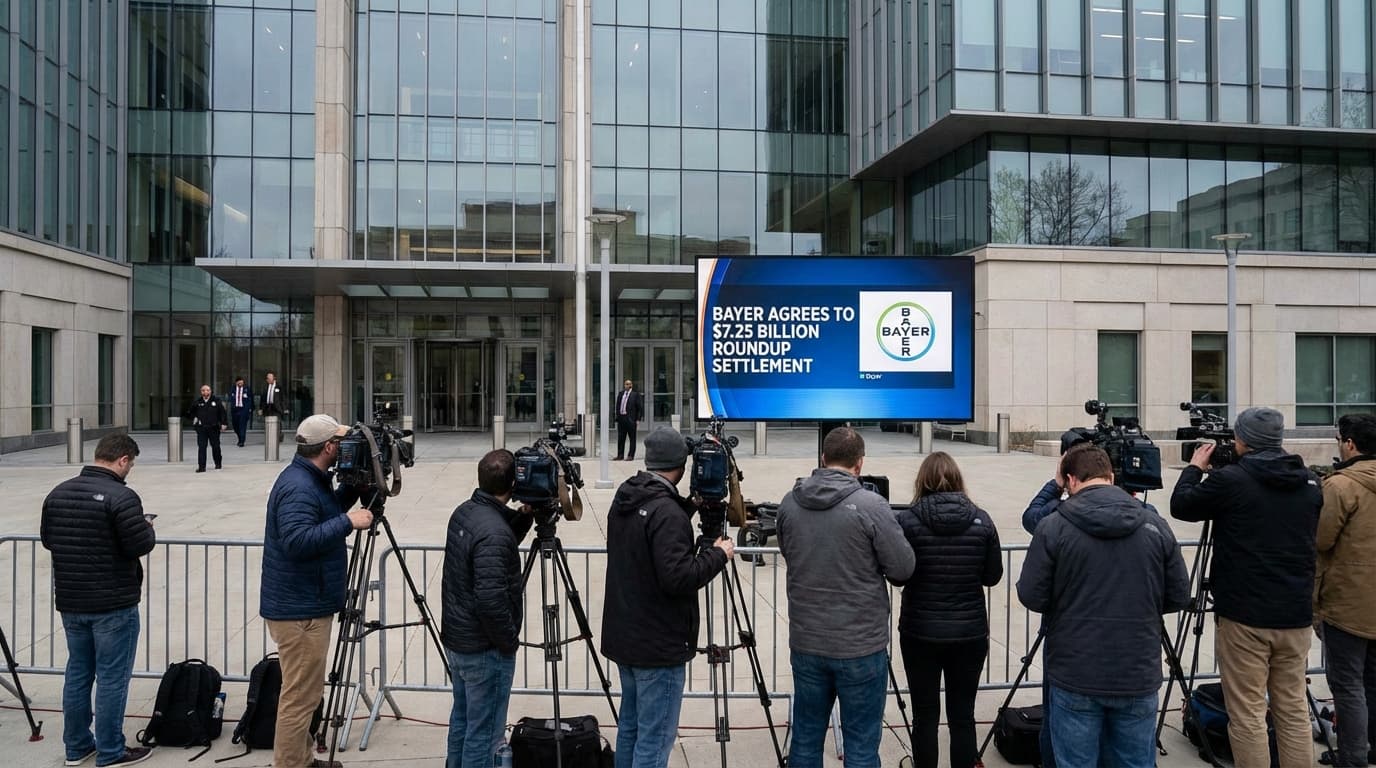
Bayer Agrees to $7.25 Billion Settlement Over Roundup Cancer Lawsuits

In a significant development for the biopharmaceutical industry and consumer safety, Bayer has reached a proposed $7.25 billion settlement addressing claims that its weedkiller Roundup caused cancer. This settlement represents one of the largest in the industry related to product liability and could have wide-reaching implications for regulatory practices and corporate responsibility in chemical and pharmaceutical product management.
On February 17, 2026, Bayer announced its agreement to a proposed $7.25 billion settlement to resolve thousands of lawsuits claiming that exposure to Roundup, a popular weedkiller, caused cancer in users. This decision brings closure to a long-standing legal battle that highlighted significant concerns about the safety of glyphosate-based herbicides and the duties of biopharmaceutical and chemical companies toward public health.
Background and Legal Context
Roundup, which contains glyphosate, has been one of the most widely used herbicides globally for several decades. However, concerns about its safety emerged in the past several years, with multiple plaintiffs alleging that glyphosate exposure increased their risk of non-Hodgkin lymphoma and other cancers. These lawsuits argued Bayer, which acquired Roundup's manufacturer Monsanto, failed to adequately warn consumers about this risk.
The proposed $7.25 billion settlement represents an effort by Bayer to mitigate ongoing liabilities and uncertainties posed by the lawsuits. The settlement is one of the largest involving pharmaceutical and agricultural chemical liability claims, underscoring the massive scale of legal and public health scrutiny the company has faced.
Implications for Biopharmaceutical and Chemical Industries
This settlement has broad implications for the biopharmaceutical industry and companies involved in manufacturing chemical products for commercial use. It serves as a benchmark for corporate responsibility, underlining the necessity for thorough product safety investigations, transparent communication with consumers, and compliance with regulatory requirements.
Moreover, it marks a trend toward greater accountability and potential financial liability for products perceived to harm public health, which could influence future company strategies around product development, safety monitoring, and risk disclosures.
Consumer Safety and Regulatory Considerations
Consumer safety remains a central focus as regulators and lawmakers look closely at how products are tested and approved for public use. The Roundup cases have stimulated debate about the adequacy of current regulatory oversight of chemical products and whether enhanced reviews and new testing protocols are necessary.
While Bayer maintains that Roundup is safe when used as directed, this settlement indicates the substantial legal and financial risks companies incur if public trust erodes or scientific uncertainties surface.
Conclusion
Bayer’s $7.25 billion proposed settlement of Roundup cancer lawsuits is a landmark event illustrating the interplay of legal accountability, public health concerns, and corporate strategies in the biopharmaceutical and chemical sectors. The implications of this settlement will likely extend beyond Bayer to affect industry practices, regulatory policies, and consumer advocacy for years to come.
For further details, refer to the original report here: Bayer agrees to $7.25 billion proposed settlement over thousands of Roundup cancer lawsuits
Join the BioIntel newsletter
Get curated biotech intelligence across AI, industry, innovation, investment, medtech, and policy—delivered to your inbox.