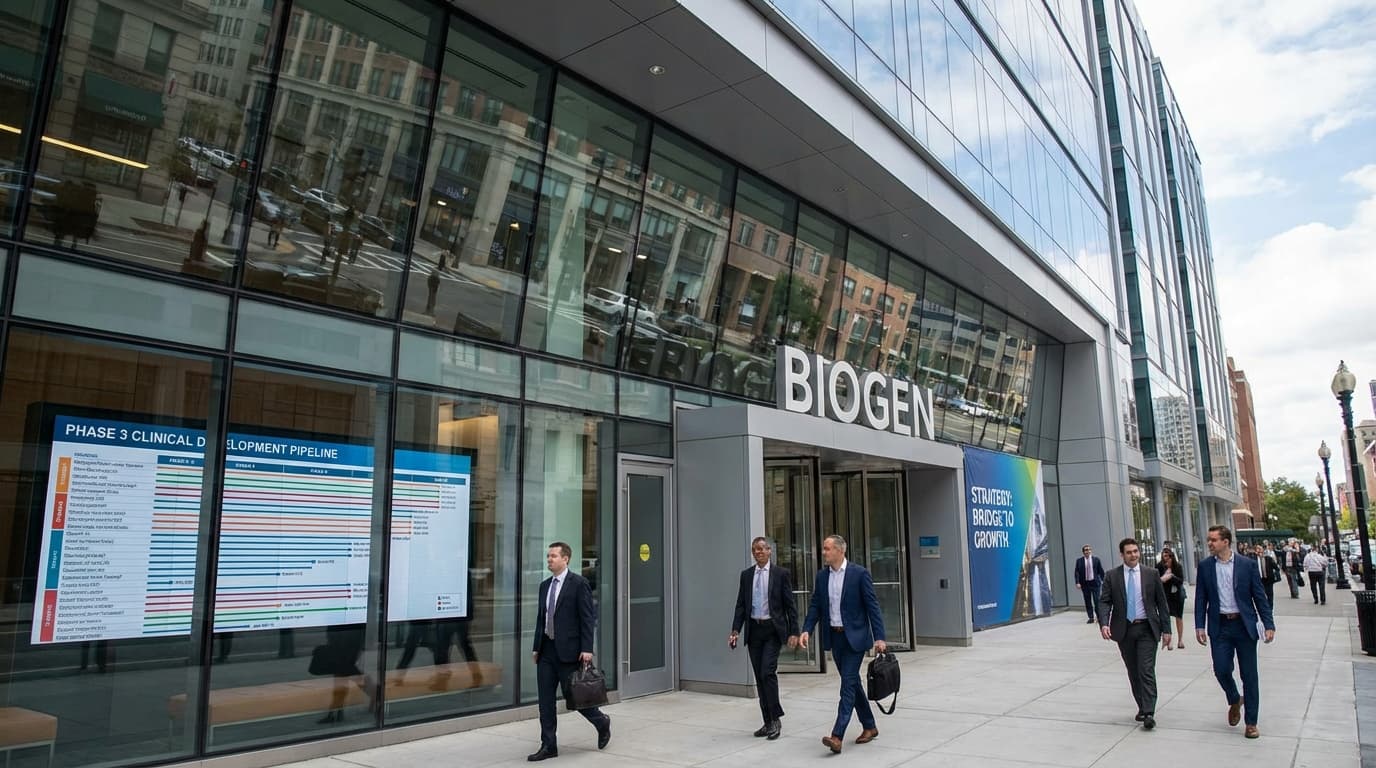
Biogen’s Strategic Push Through a Crowded Phase 3 Pipeline to Counter Generic Pressures

Biogen, a major player in the biopharmaceutical sector, is navigating an evolving landscape where generic drugs exert unprecedented pressure on flagship products. To sustain its market position and rekindle growth, the company is leveraging a congested Phase 3 pipeline and exploring strategic partnerships that may shape its future trajectory.
Biopharmaceutical industry dynamics are increasingly shaped by the push and pull between established product portfolios and emerging generics that threaten revenue streams. Biogen, recognized for its leadership in neurological disorders, notably multiple sclerosis (MS), finds itself confronting intensifying generic competition that compromises its traditional revenue bases.
In response, Biogen has articulated a 'Bridge To Growth' strategy that hinges on a stacked late-stage pipeline of Phase 3 clinical programs. This approach aims to diversify and strengthen its portfolio with novel therapies that can address unmet medical needs and secure regulatory approvals.
The Phase 3 pipeline consists of a varied array of potential new drug candidates spanning multiple indications within neurology and possibly expanding into other therapeutic areas. Such a pipeline reflects Biogen's commitment to innovation and its recognition of the need to evolve beyond legacy products facing patent cliffs and generic encroachment.
Operationally, progressing a dense pipeline through the demanding stages of late-phase trials demands substantial resource allocation, including clinical trial management, regulatory navigation, and comprehensive data analysis. Success in these trials could lead to new approvals and broaden Biogen's market offerings.
Strategically, Biogen is also actively hunting for licensing deals, acquisitions, or collaborations that can complement its internal pipeline. Such deals may provide accelerated access to promising therapies, technologies, or platforms crucial for competitive advantage.
The balancing act involves managing existing products' lifecycle while investing sufficiently in research and development to fuel future growth. Biogen's ability to effectively integrate new products into its commercial framework will be pivotal.
Industry analysts observe that Biogen's strategy reflects broader trends in biopharma where companies must continuously innovate and adapt to maintain relevance and deliver shareholder value amid shifting market forces.
Challenges to this strategy include regulatory uncertainties, trial outcome variability, escalating development costs, and potential competition from other innovative biotechs targeting similar indications.
Nevertheless, Biogen's concerted focus on a robust late-stage pipeline combined with strategic deal-making underscores a proactive stance toward securing long-term growth amid disruptive market conditions.
This approach exemplifies how mature biopharmaceutical companies can leverage innovation pipelines and partnerships to navigate the complex environment shaped by generics and biosimilars.
For an in-depth analysis of Biogen’s initiatives and pipeline status, see the full report at BioSpace: https://www.biospace.com/business/biogens-bridge-to-growth-cuts-through-a-stacked-phase-3-pipeline
Join the BioIntel newsletter
Get curated biotech intelligence across AI, industry, innovation, investment, medtech, and policy—delivered to your inbox.