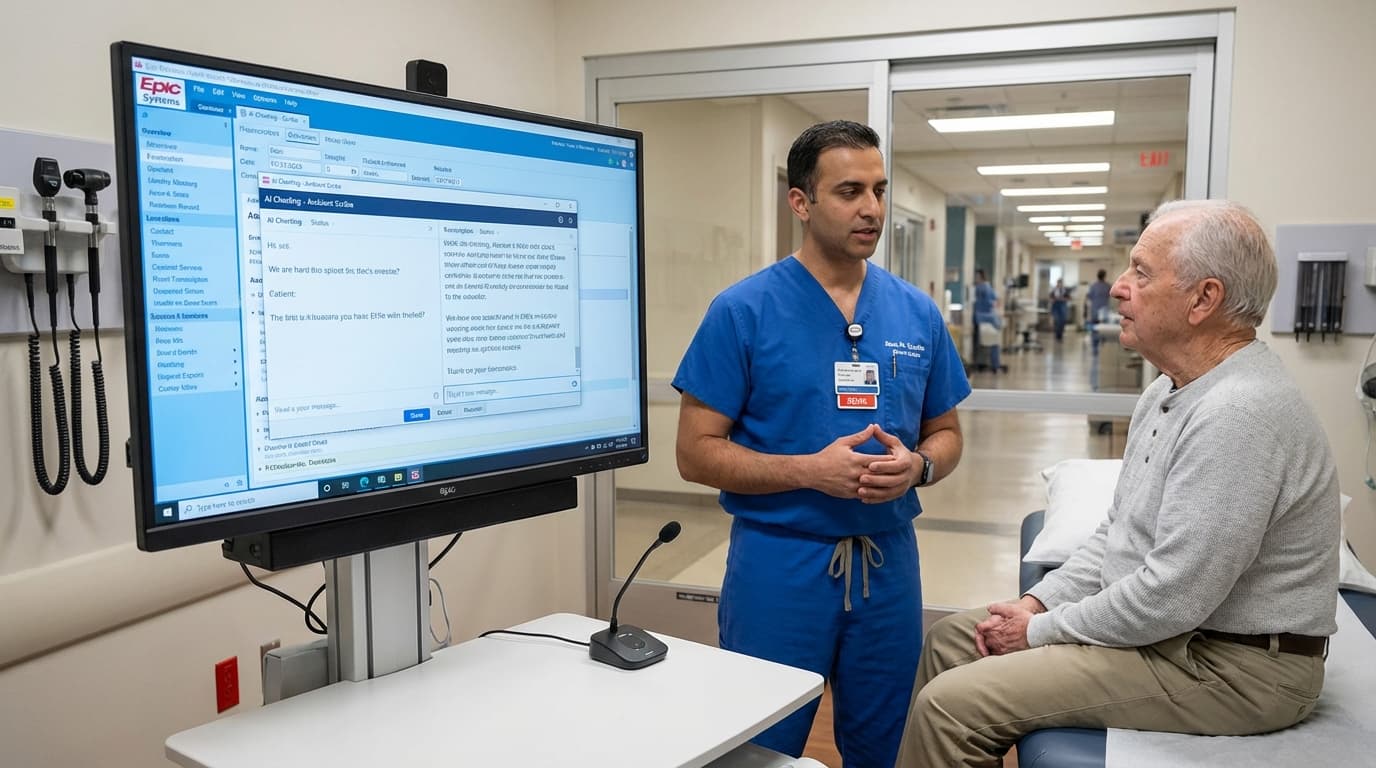
Epic Systems Launches AI Charting: A Potential Game-Changer for the Ambient Scribe Market

Epic's AI Charting technology leverages advanced AI methodologies to automate and enhance electronic health record documentation. This development could alter the landscape of ambient scribe services and redefine clinician workflows.
Epic Systems Launches AI Charting: Transforming Clinical Documentation
Epic Systems recently unveiled its AI Charting feature, marking a significant advancement in the utilization of artificial intelligence in clinical documentation. The integration of AI into electronic health records (EHRs) is poised to redefine traditional methods of ambient scribing, potentially disrupting market dynamics and service models.
Understanding AI Charting in Healthcare
AI Charting by Epic represents the application of machine learning algorithms and natural language processing techniques to the process of capturing clinical notes from patient encounters. Traditionally, clinicians rely on either manual input or ambient scribe services, which involve human scribes listening in and documenting the consultation.
Epic's innovation automates much of this process, aiming to enhance accuracy, efficiency, and reduce the administrative burden on healthcare providers. Such automation ensures more consistent documentation quality and may alleviate the challenges associated with ambient noise and human error.
Potential Market Disruption
The ambient scribe market has grown significantly, supported by increasing demand for documentation assistance. With Epic's scalable AI Charting solution, this market faces a new paradigm where AI-driven solutions could replace or supplement human scribes.
Key implications include:
- Reduction in labor costs: Automated charting reduces reliance on human scribes, potentially cutting operational expenses.
- Efficiency gains: Faster documentation turnaround may facilitate quicker clinical decision-making.
- Market restructuring: Established ambient scribe providers may need to reevaluate business models to compete or collaborate with AI technologies.
Technical Capabilities and Integration
Epic's AI Charting leverages cutting-edge AI technologies configured to integrate seamlessly within their existing EHR infrastructure. This facilitates compatibility across the extensive Epic user base, which is a significant advantage over third-party ambient scribe services.
The technology likely incorporates data privacy safeguards consistent with healthcare regulations like HIPAA, ensuring that patient information integrity is preserved despite the AI-driven processes.
Challenges and Considerations
While promising, AI Charting introduces several challenges:
- Accuracy and reliability: Ensuring the AI correctly interprets complex medical dialogue is paramount to patient safety.
- Provider acceptance: Clinician trust and adaptation to AI-generated documentation will influence uptake.
- Regulatory oversight: Compliance with existing and emerging healthcare regulations on AI applications remains critical.
Industry Reactions and Outlook
The AI Charting feature from Epic has generated considerable attention across healthcare technology circles. Competitors and ambient scribe services are evaluating strategic responses, including enhanced AI integration or hybrid human-AI models.
From a market perspective, this advancement could accelerate the adoption of AI technologies in healthcare administration, potentially leading to broader innovations in workflow automation and patient care optimization.
Conclusion
Epic Systems' AI Charting technology potentially represents a pivotal shift in clinical documentation by marrying AI capabilities with existing EHR workflows. This development threatens to disrupt the ambient scribe market by offering an automated, efficient, and scalable alternative. Stakeholders across healthcare delivery and technology sectors will need to monitor and adapt to these changes, leveraging opportunities while managing emerging risks.
As the technology evolves, detailed data on real-world performance and outcomes will be essential to fully assess this AI innovation's impact on the healthcare landscape.
Source: STAT News
Join the BioIntel newsletter
Get curated biotech intelligence across AI, industry, innovation, investment, medtech, and policy—delivered to your inbox.