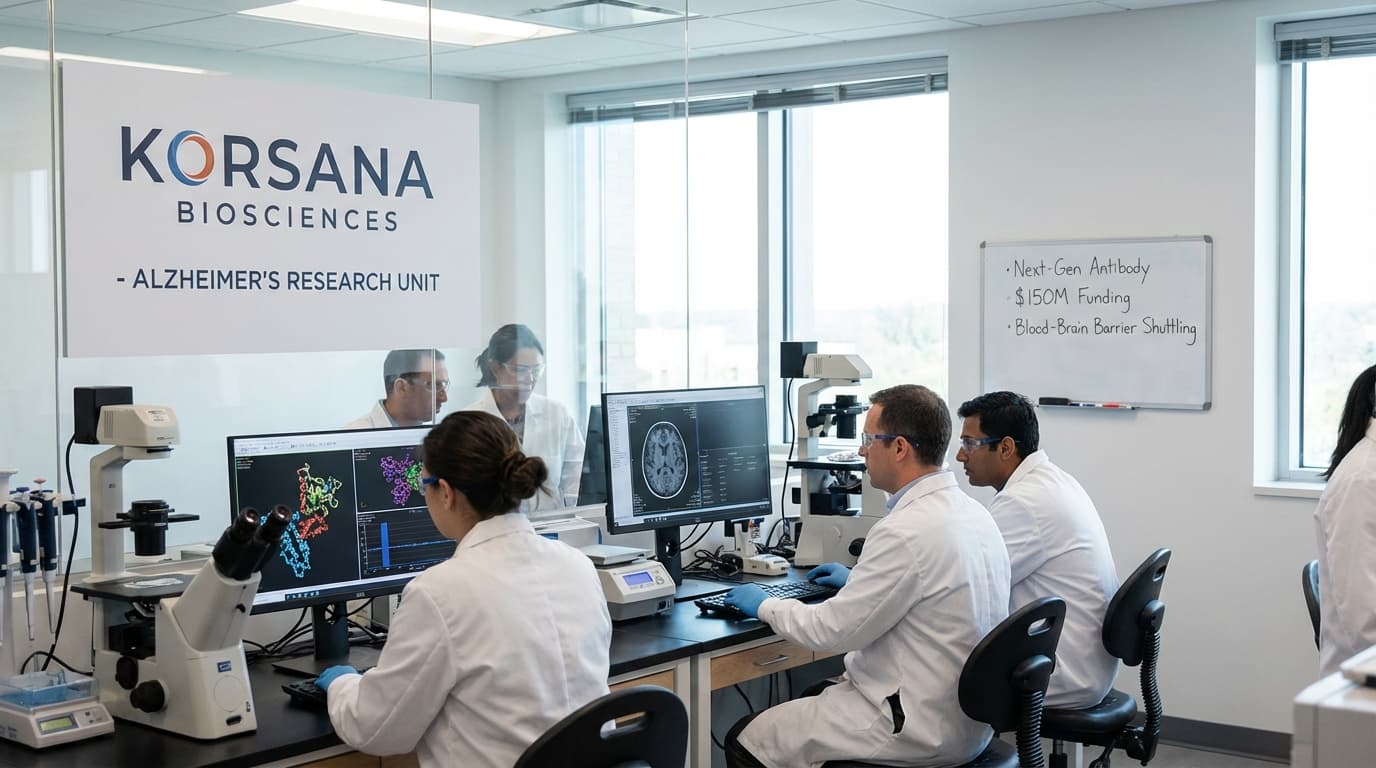
Korsana Biosciences Breaks New Ground in Alzheimer’s Research With $150M Funding and Next-Gen Antibody

Alzheimer’s disease remains one of the most challenging neurodegenerative conditions with urgent demand for effective treatments. Korsana’s innovative approach utilizes next-generation shuttling technology to bolster brain delivery of antibodies, potentially minimizing amyloid-related imaging abnormalities and improving therapeutic outcomes. This post delves into Korsana’s strategy, funding landscape, and implications for Alzheimer's treatment development.
The persistent challenges in treating Alzheimer’s disease have galvanized researchers and biotech firms to pioneer novel therapeutic strategies. Among these emerging innovators, Korsana Biosciences stands out with its recent successful $150 million funding round aimed at advancing a next-generation antibody therapy targeting amyloid pathology implicated in Alzheimer’s.
Korsana’s approach is centered on improving drug delivery to the brain using sophisticated shuttling technologies. This mechanism enhances the penetration of antibodies through the blood-brain barrier, a critical obstacle that has historically limited the efficacy of many neurotherapeutic candidates. By optimizing delivery, Korsana aims to increase therapeutic concentrations at the site of pathology, potentially translating to more effective disease modification.
Moreover, Korsana is addressing a significant clinical concern with amyloid-targeting antibodies: amyloid-related imaging abnormalities (ARIA). These abnormalities, which can manifest as brain swelling or microhemorrhages, represent a safety risk that has complicated the clinical acceptance of prior amyloid therapies. The company’s next-generation antibody design seeks to lower the incidence of ARIA, thereby mitigating adverse events and enhancing patient safety profiles.
The infusion of $150 million into Korsana not only underscores investor confidence in the scientific premise but also reflects wider enthusiasm in the biotech sector for innovative Alzheimer’s treatments amidst growing socio-economic impacts of the disease. This capital is expected to accelerate preclinical and clinical development efforts and support the refinement of shuttling technology platforms.
Additionally, the emergence of Korsana contributes to the increasingly competitive Alzheimer’s therapeutic landscape, which has traditionally been dominated by established pharmaceutical giants. Korsana’s innovative modalities highlight a trend towards biotechnological innovation, where startups leverage advanced molecular engineering to tackle complex neurodegenerative diseases.
From a broader perspective, Korsana’s progress exemplifies the critical intersection of technological innovation, targeted therapy design, and strategic funding that is necessary to break new ground in challenging areas of medicine such as Alzheimer’s disease.
As the science progresses, continued scrutiny of Korsana’s clinical trial outcomes, safety profiles, and regulatory interactions will shed light on the viability of this approach. Successful translation could pave the way for new standards in delivering therapies across the blood-brain barrier and managing safety challenges linked to amyloid therapies.
In conclusion, Korsana’s ambitious entry into the Alzheimer’s amyloid arena represents a significant stride in biotech innovation aimed at confronting one of the most pressing neurodegenerative disorders. The company’s efforts not only promise advances in treatment methodology but also exemplify the pivotal role of next-generation technologies and funding in shaping the future landscape of Alzheimer’s therapeutics.
Join the BioIntel newsletter
Get curated biotech intelligence across AI, industry, innovation, investment, medtech, and policy—delivered to your inbox.