Roche's Obesity Drug CT-388: Promising Phase 2 Results and Future Prospects in 2026

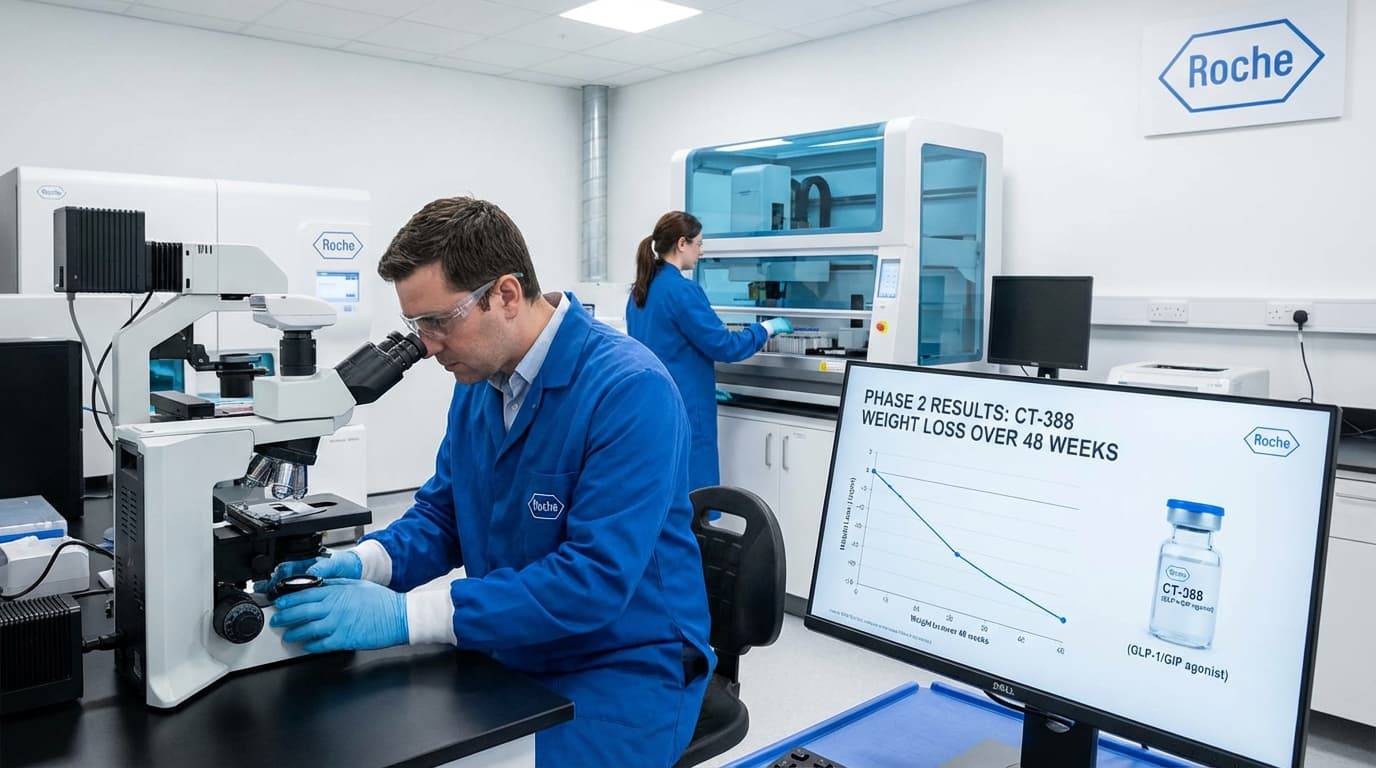
Phase 2 data reveal Roche's investigational GLP-1 and GIP agonist achieved a 22.5% placebo-adjusted weight loss at 48 weeks. This efficacy supports the advancement to pivotal Phase 3 trials, marking a critical step in the development of new obesity treatment options amid a highly competitive market.
Obesity remains a significant global health challenge, associated with numerous comorbidities including cardiovascular disease, diabetes, and certain cancers. Pharmacologic interventions have increasingly targeted appetite regulation and metabolic processes, with GLP-1 receptor agonists emerging as a particularly effective therapeutic class.
In this context, Roche’s recent Phase 2 clinical trial results for CT-388, a dual agonist targeting GLP-1 and GIP receptors, provide encouraging evidence. The trial demonstrated a robust placebo-adjusted weight loss of 22.5% at 48 weeks. This level of efficacy compares favorably with existing obesity drugs currently on the market or in late-stage development.
The design of the Phase 2 trial incorporated stringent endpoints to evaluate the safety and durability of weight loss, integral to regulatory considerations. Additionally, tolerability and adverse effect profiles were closely monitored to ensure the therapeutic potential aligns with acceptable safety standards.
Roche plans to progress CT-388 into Phase 3 trials, which will involve larger, more diverse patient populations to confirm efficacy and monitor longer-term outcomes. This development phase is critical for eventual regulatory approval and market entry.
The obesity therapeutics landscape is highly competitive, with multiple pharmaceutical companies advancing novel agents including combination therapies that seek to maximize weight loss while minimizing side effects. Roche’s strategic focus on dual receptor agonism leverages emerging scientific understanding of metabolic regulation pathways, potentially offering a differentiated product profile.
Beyond the clinical trial results, Roche’s investment in this therapeutic area underscores the broader industry recognition of obesity as a chronic disease requiring sustained medical intervention. This paradigm shift is influencing reimbursement policies, clinical guidelines, and healthcare provider engagement.
While Roche’s CT-388 shows promise, the true test of its clinical and commercial viability will depend on forthcoming Phase 3 data and how well it integrates into existing treatment protocols. Additional studies examining combination drug regimens may further elucidate optimal therapeutic approaches.
Overall, Roche’s advancement of CT-388 reflects ongoing innovation in obesity treatment, representing hope for improved patient outcomes in a condition that affects hundreds of millions worldwide.
For more comprehensive details on Roche’s CT-388 and its clinical development, visit: https://medcitynews.com/2026/01/roche-obesity-weight-loss-glp1-gip-agonist-ct-388-rhhby/
Join the BioIntel newsletter
Get curated biotech intelligence across AI, industry, innovation, investment, medtech, and policy—delivered to your inbox.