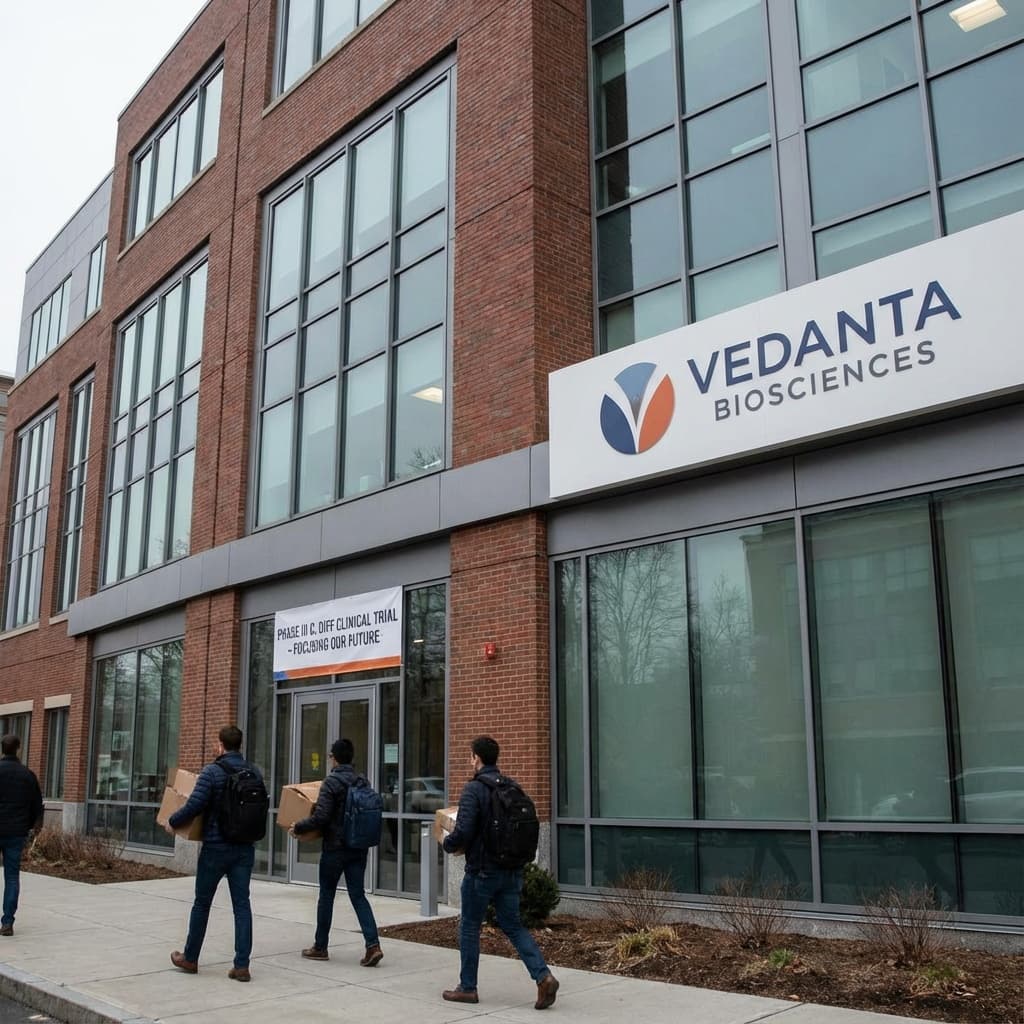
Vedanta Biosciences Makes Major Workforce Cuts Amid Focus on Phase III C. Diff Drug Study

In a move to streamline operations and concentrate resources, Vedanta Biosciences, a Cambridge-based biotech company, recently laid off half of its workforce and furloughed many others. This restructuring aims to prioritize the upcoming Phase III study of its lead candidate targeting C. difficile infections.
Vedanta Biosciences, a biotechnology firm headquartered in Cambridge, Massachusetts, is undergoing a significant operational transformation as it grapples with recent financial and strategic pressures. Within less than six months of a prior 20% workforce reduction, the company has announced an even more substantial cut, affecting approximately half of its employees, with many others placed on furlough.
This drastic downsizing reflects a strategic pivot by the company to concentrate its resources and efforts predominantly on the critical Phase III clinical trial of its investigational drug designed to combat Clostridioides difficile infections, a serious and often recurrent pathogen that poses a significant health threat, particularly in healthcare settings.
Clostridioides difficile, commonly referred to as C. diff, presents challenges due to its resistance and the severity of infections it causes, including severe diarrhea and life-threatening inflammation of the colon. Developing effective therapies remains a public health priority.
Vedanta’s decision to prioritize this Phase III study underscores its commitment to advancing the drug through critical late-stage testing to potentially bring a novel treatment option to patients in need.
However, such corporate retrenchments often signal the financial and operational difficulties biotech companies face in balancing exploratory research with development costs, especially in the highly competitive and capital-intensive biopharmaceutical landscape.
The workforce reductions may impact various ongoing research programs and operational capabilities, posing challenges for Vedanta in maintaining momentum across its broader pipeline.
Nevertheless, by focusing on the promising Phase III trial, the company aims to demonstrate clinical efficacy and safety that could lead to regulatory approval and eventual commercialization, which are essential milestones for securing future growth and investment.
This approach reflects a common industry trend where companies streamline pipelines and resource allocations to de-risk drug development projects and align organizational focus with high-priority assets.
The move also highlights the broader dynamics of the biotech sector, where fluctuating investor sentiment, reimbursement environments, and competitive pressures influence company strategies and employment trends.
Vedanta’s current position serves as a case study in the challenges biotech firms encounter as they transition from early-stage innovation to late-stage clinical development and market entry.
Stakeholders, including employees, investors, and partners, will be watching closely to see how the company navigates this critical phase of its development trajectory amid the workforce changes.
As Vedanta advances its Phase III trial, the outcomes could significantly impact its future prospects and contribute to the evolving therapeutic landscape for difficult-to-treat infectious diseases.
Join the BioIntel newsletter
Get curated biotech intelligence across AI, industry, innovation, investment, medtech, and policy—delivered to your inbox.