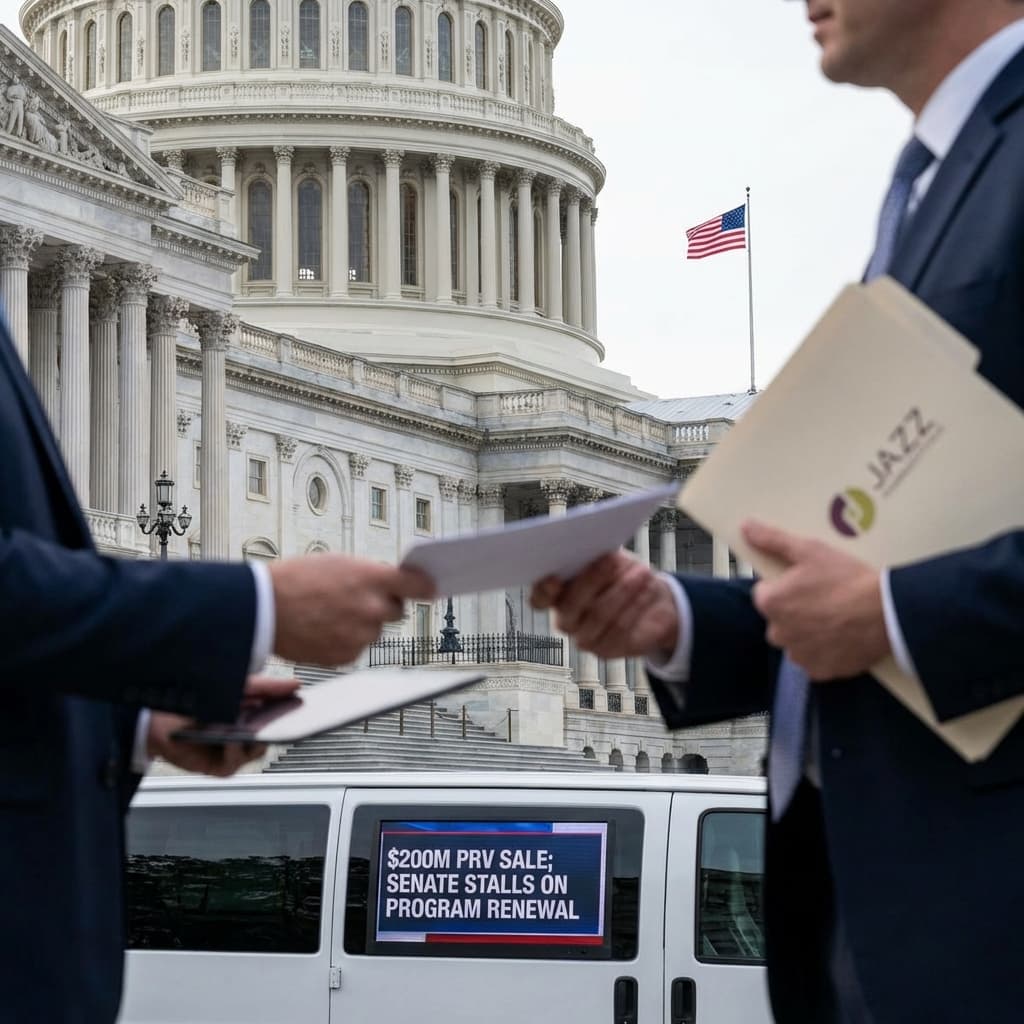
Jazz Sells Priority Review Voucher for $200M as Program’s Renewal Stalls in Senate

Jazz Pharmaceuticals recently sold one of its Priority Review Vouchers (PRVs) for $200 million, marking a substantial financial transaction as the future of the PRV program hangs in the balance due to legislative delays. The details of the buyer remain undisclosed, and the allocation of the remaining proceeds is unclear, emphasizing the nuanced complexities in biotech regulatory incentives.
The landscape of regulatory incentives for drug development in the United States is witnessing a critical moment as Jazz Pharmaceuticals announced the sale of its Priority Review Voucher (PRV) for $200 million. This noteworthy transaction underscores the financial importance of PRVs to biopharmaceutical companies developing treatments for unmet medical needs, especially as the United States Senate has yet to renew the program upon which these vouchers depend.
Understanding Priority Review Vouchers
Priority Review Vouchers are regulatory incentives granted by the U.S. Food and Drug Administration (FDA) to encourage development of drugs for neglected tropical diseases, rare pediatric diseases, and medical countermeasures. These vouchers can be sold or transferred, offering companies a valuable asset that entitles the holder to expedited FDA review of a subsequent drug application, significantly shortening the review time which can enhance product market entry timelines.
Jazz Pharmaceuticals' recent sale of such a voucher for $200 million reflects the high commercial value attributed to the ability to accelerate regulatory review processes. Under the terms revealed, Jazz will receive half of the net proceeds from the sale, although it remains unclear which entities or stakeholders will receive the remainder. This lack of transparency around the distribution of proceeds adds further complexity to understanding the full economic dynamics at play.
Legislative Uncertainty and Program Renewal
The PRV program has been subject to ongoing political scrutiny and debate regarding its renewal. Since its initial establishment, the program has been periodically extended but is currently languishing in the Senate awaiting reauthorization. This delay injects uncertainty into the value and future availability of PRVs, potentially impacting investment and development strategies within the biotech industry.
Stakeholders within the pharmaceutical industry and policy spheres are watching the Senate proceedings closely, recognizing that the fate of PRV renewals will have significant implications for the financing and incentivization of rare and neglected disease drug development. Without government endorsement, the program's continuity and the associated market for PRVs could be jeopardized, potentially slowing the advancement of vital therapeutics.
Financial and Strategic Implications for Jazz Pharmaceuticals
For Jazz Pharmaceuticals, monetizing its PRV through this sale provides an influx of capital that can be leveraged for further research, development, or corporate initiatives. Given that only half of the net proceeds are allocated to Jazz, the company may be sharing this financial benefit with partners or stakeholders involved in the voucher's initial acquisition or development pathway. However, details remain sparse, prompting speculation about broader business arrangements within the rare disease and oncology sectors in which Jazz operates.
Industry-wide Reflections
This sale comes at a time when biopharma companies are re-assessing regulatory tools and incentives amid changing political landscapes and increasing R&D costs. The PRV's market value demonstrates the continuing need for mechanisms that balance commercial interests with public health priorities, ensuring that innovative treatments, especially for underserved patient populations, reach the market efficiently.
In conclusion, Jazz Pharmaceuticals' $200 million sale of a Priority Review Voucher amid legislative delays highlights the intertwined nature of regulatory policy, market incentives, and biotech innovation strategies. The outcome of the Senate's decision on program renewal will be critical for the future landscape of drug development incentives in the U.S., influencing both the strategic planning of companies and the availability of therapies for rare and neglected diseases.
(Source: Jazz Sells Priority Review Voucher for $200M as Program’s Renewal Languishes in Senate)
Join the BioIntel newsletter
Get curated biotech intelligence across AI, industry, innovation, investment, medtech, and policy—delivered to your inbox.