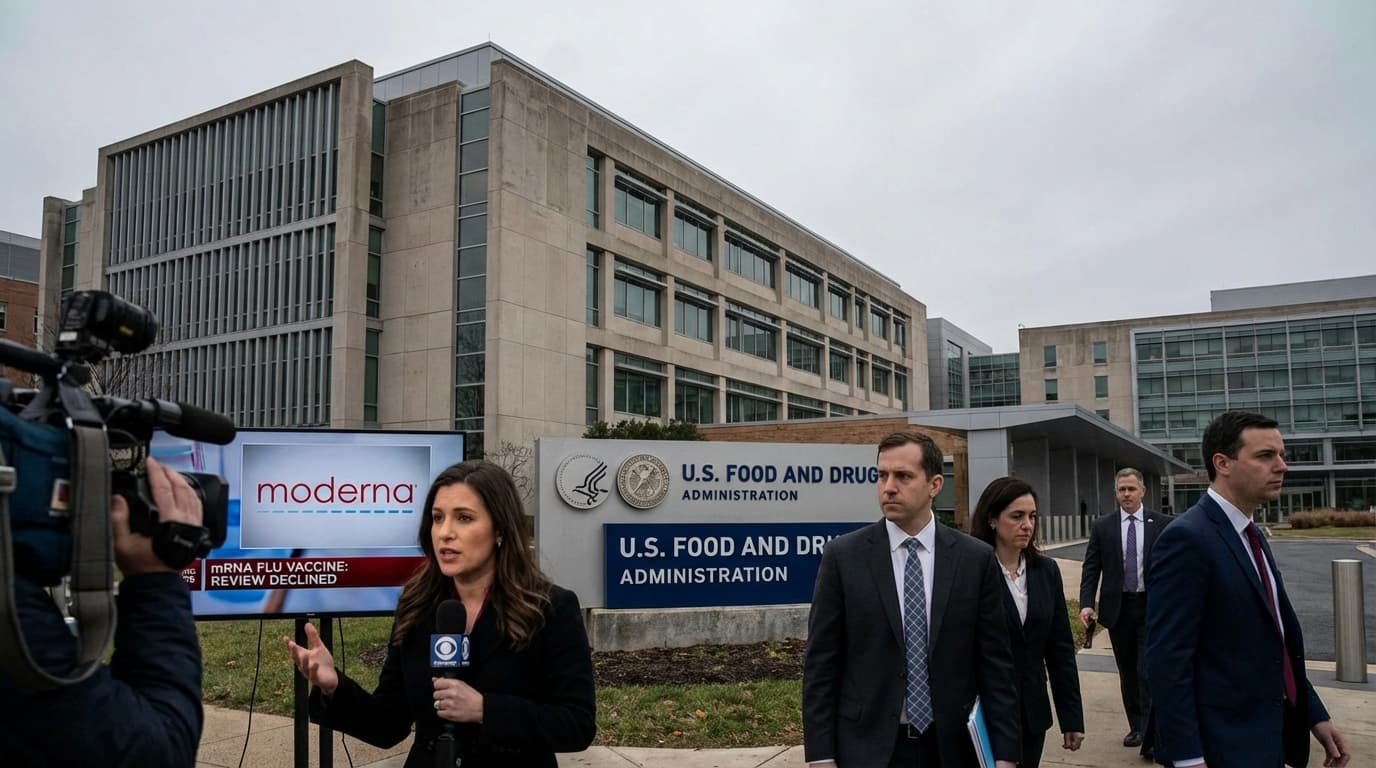
Moderna’s mRNA Flu Vaccine Faces Setback as FDA Declines Review Amid Regulatory Turmoil

The FDA’s decision not to review Moderna’s mRNA-based flu vaccine has elicited widespread responses from industry experts and regulators. This controversy occurs amid a broader crisis in communication within the FDA, affecting multiple companies and complicating the regulatory landscape for novel vaccine technologies.
The recent refusal by the U.S. Food and Drug Administration (FDA) to consider Moderna’s application for its mRNA flu vaccine, mRNA-1010, underscores a multifaceted challenge facing both the agency and the pharmaceutical landscape. This decision is more than a simple regulatory denial; it is emblematic of a broader communications crisis at the FDA that has unfolded over the past nine months, entangling numerous biopharma companies including Sarepta, Capricor, and uniQure, among others.
At the heart of the issue lies a dispute over the requirements and expectations the FDA has for Moderna's flu vaccine candidate. According to industry sources, the agency questioned the data provided, asserting that Moderna’s submissions did not fully adhere to its accelerated pathways and testing protocols. This disconnect has raised questions about whether the FDA has shifted its regulatory 'goalposts,' creating an unpredictable environment for vaccine developers.
Moderna’s vaccine, designed using mRNA technology similar to that employed in its widely used COVID-19 vaccines, was projected to be a significant revenue driver for the company, with forecasts estimating contributions of approximately $1 billion by 2028. The FDA’s outright refusal, therefore, not only halts regulatory progress but also imperils Moderna’s commercial and strategic breakeven plans.
The controversy has been compounded by notable personal and institutional strains within the FDA’s Center for Biologics Evaluation and Research. Dr. Vinay Prasad, the center’s head, has faced criticism and interpersonal backlash related to the decision, reflecting internal discord that may be influencing regulatory consistency. Despite this, HHS has publicly backed Prasad’s stance, signaling institutional support even as calls rise for Moderna to acknowledge deviations from the FDA’s publicized guidance in vaccine trial designs.
The impact of this decision is reverberating widely across the vaccine development ecosystem. Industry experts warn that this could set a damaging precedent that stifles innovation and discourages investment in next-generation vaccines. The implied message that even established players like Moderna must navigate a moving and opaque regulatory framework risks undermining the entire U.S. vaccine development sector.
Several commentaries have highlighted the broader implications for public health and vaccine availability, noting that the FDA's inconsistent communication could deter companies from pursuing vital vaccines for infectious diseases beyond influenza.
This regulatory episode demonstrates the critical need for clearer, transparent, and consistent dialogue between the FDA and biotechnology companies, especially as they strive to deploy emergent technologies such as mRNA platforms. Such alignment is essential not only for individual product approvals but also for sustaining broader innovation pipelines that serve public health interests globally.
In conclusion, Moderna’s flu vaccine refusal encapsulates a complex intersection of regulatory stringency, internal agency challenges, and the delicate balance of fostering innovation while ensuring safety and efficacy. It spotlights the necessity for the FDA to recalibrate its communication strategies and regulatory frameworks to better support novel biomedical advancements in a rapidly evolving technological environment.
For a comprehensive understanding of the unfolding situation, see: Moderna’s Outright Flu Refusal Just the Latest Case of Crossed FDA Signals.
Join the BioIntel newsletter
Get curated biotech intelligence across AI, industry, innovation, investment, medtech, and policy—delivered to your inbox.