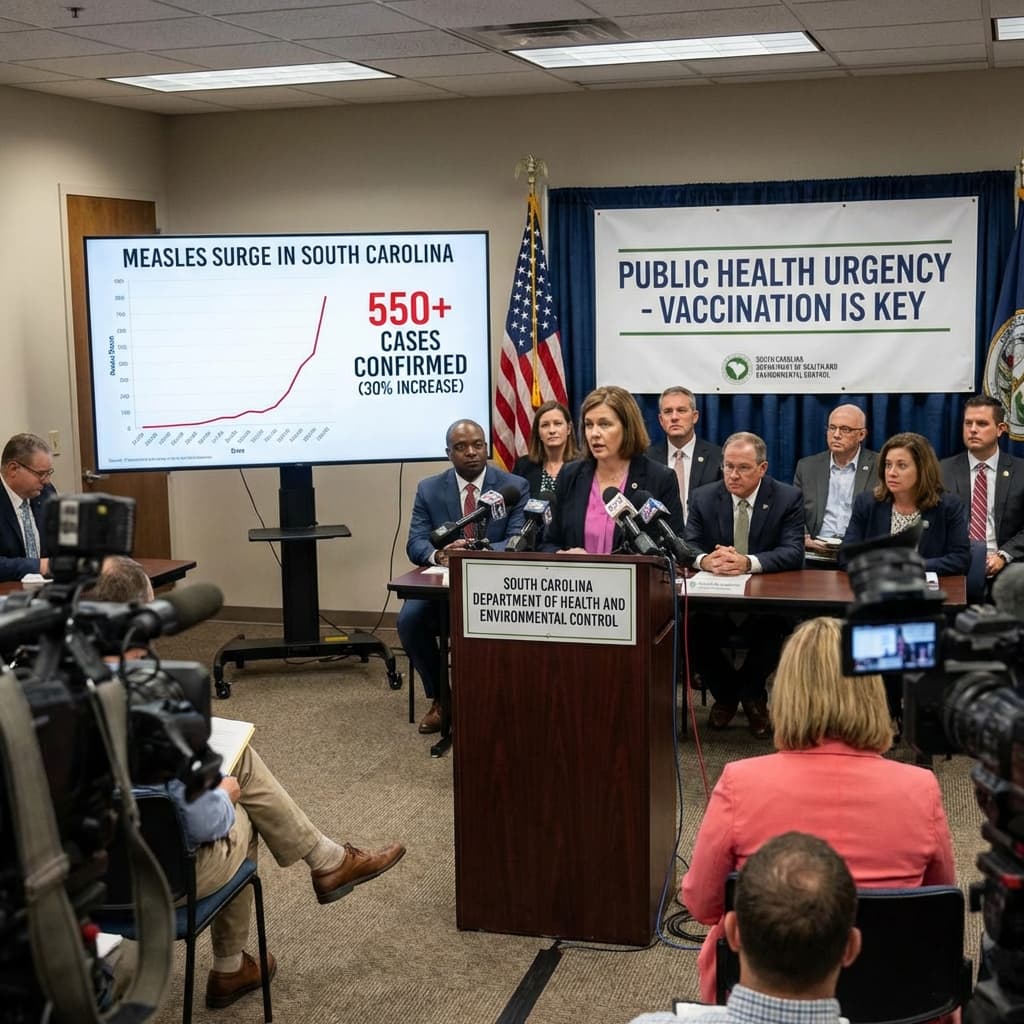
Measles Cases Surge by Nearly 30% in South Carolina, Raising Public Health Concerns

Recent data from South Carolina's state health officials reveal a nearly 30% increase in reported measles cases over the last few days, reaching more than 550 cases. This resurgence poses critical questions about vaccination coverage, outbreak containment, and healthcare system preparedness.
The state of South Carolina is currently witnessing a concerning rise in measles cases, as recently reported by health officials. The total number of confirmed infections has climbed by almost 30% in just a matter of days, now surpassing 550 cases.
Measles, a highly contagious viral disease, continues to challenge public health infrastructure despite the widespread availability of effective vaccines. The outbreak in South Carolina underscores ongoing vulnerabilities in vaccination coverage, herd immunity gaps, and the importance of maintaining robust surveillance and rapid response mechanisms.
This recent upswing in measles incidence demands a closer examination of the factors contributing to the spread. Vaccine hesitancy, access disparities, and potential breaks in outbreak containment protocols could be driving factors exacerbating the situation.
Effective management of measles outbreaks hinges on coordinated public health actions, including contact tracing, timely vaccination campaigns, and community education to mitigate misinformation about vaccine safety and efficacy.
Moreover, this rise in cases may strain local healthcare resources, necessitating preparedness among medical providers to diagnose, treat, and prevent further transmission.
In the broader epidemiological context, measles outbreaks serve as bellwethers for the challenges faced by immunization programs worldwide, where complacency or disruption of vaccination services can lead to resurgence.
Addressing this recent surge in South Carolina requires an integrated approach involving public health authorities, healthcare providers, and community stakeholders to bolster vaccination rates and implement effective outbreak control measures.
Continued monitoring and research into the dynamics of the outbreak will be essential to inform public health strategies and prevent similar occurrences in other regions.
The situation remains fluid, with authorities likely to issue further updates and recommendations as more information becomes available.
Join the BioIntel newsletter
Get curated biotech intelligence across AI, industry, innovation, investment, medtech, and policy—delivered to your inbox.