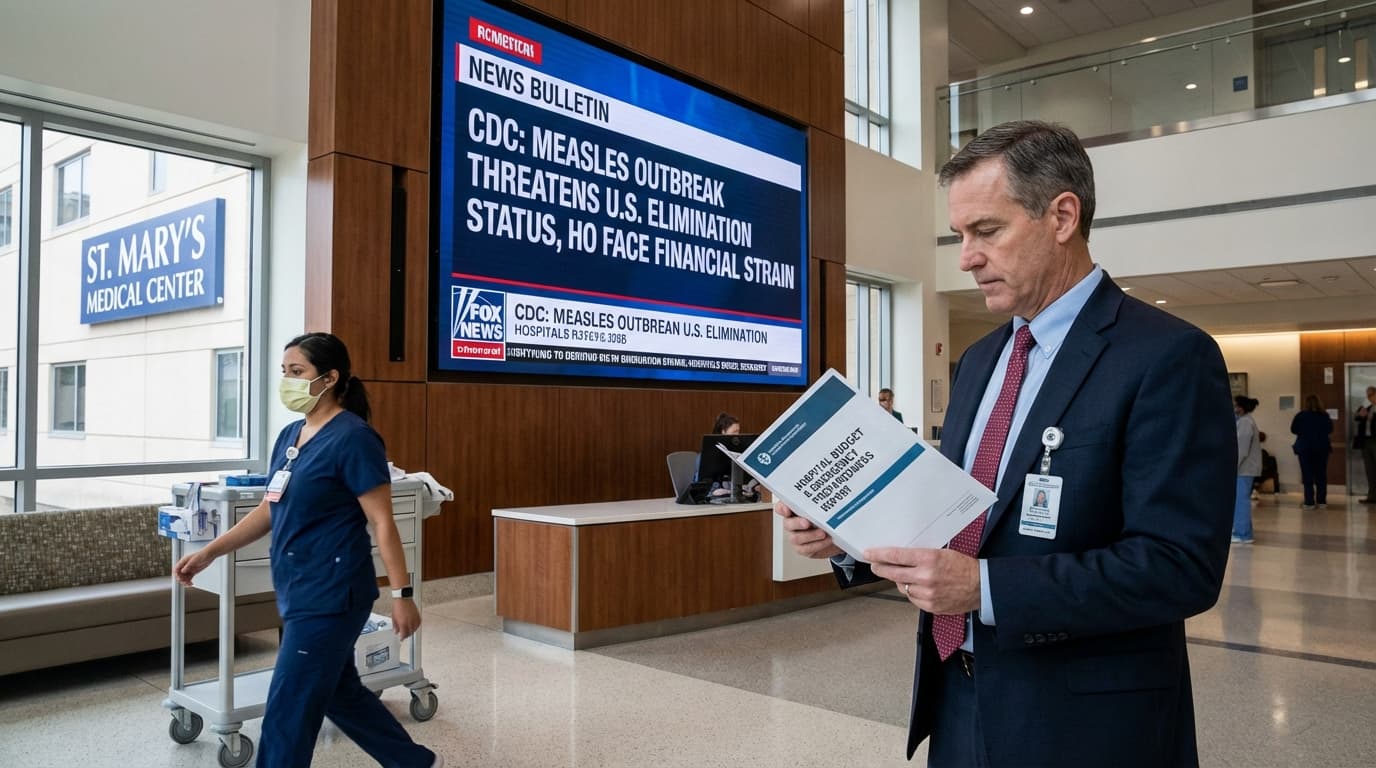
Measles Outbreak and Hospital Financial Challenges Raise Concerns for U.S. Healthcare System

As measles cases rise across the United States, the implications extend beyond public health, impacting hospital finances and the broader healthcare infrastructure. Stakeholders express concern over these intertwined challenges amid warnings from health officials about vaccine complacency and resource constraints.
The United States is currently experiencing a notable measles outbreak that threatens to reverse decades of progress in controlling this highly contagious viral disease. The Centers for Disease Control and Prevention (CDC) has highlighted the alarming trend, indicating that the country may soon lose its measles elimination status, a designation awarded when indigenous transmission of measles ceases for a prolonged period.
This resurgence is occurring amidst a complex landscape where vaccine hesitancy, misinformation, and uneven vaccination coverage create vulnerabilities in community immunity. Public health experts emphasize that maintaining high vaccination rates is critical to preventing outbreaks and protecting vulnerable populations.
Concurrently, hospitals face significant financial challenges exacerbated by the outbreak. The increased demand for hospital services due to measles cases strains already tight budgets. Hospital executives report that these pressures are compounded by the broader economic environment and ongoing operational costs.
In a recent episode of "The Readout LOUD" podcast, top officials including Mehmet Oz, a notable figure in healthcare policy, discussed the dual challenges presented by the measles outbreak and the financial hurdles confronting hospitals. Their dialogue underscored the urgent need for coordinated strategies combining public health initiatives, vaccination campaigns, and financial support mechanisms for healthcare providers.
The intersection of infectious disease management and healthcare economics underscores the complexity of responding effectively to public health crises. Hospitals must balance maintaining high standards of care, investing in preparedness and response infrastructure, and managing financial sustainability.
Moreover, the outbreak has reignited discussions on healthcare policies, preventative care funding, and the role of public and private sectors in safeguarding community health. There is growing consensus that addressing these challenges requires comprehensive action plans that include education, outreach, and transparent communication to build public trust in vaccination programs.
The current measles outbreak serves as a stark reminder of the fragility of disease elimination and the critical role of vaccination in protecting public health. It also highlights how healthcare institutions operate within broader economic and social systems that influence their capacity to respond to emergencies.
Looking ahead, stakeholders advocate for increased investment in public health infrastructure, enhanced surveillance systems, and robust support for hospitals. These measures are essential not only to manage the immediate outbreak but also to fortify the healthcare system against future infectious disease threats.
In conclusion, the ongoing measles outbreak and the associated financial strains on hospitals present intertwined challenges requiring multisectoral collaboration. Maintaining vaccination coverage, supporting healthcare providers, and ensuring sustainable funding emerge as pivotal elements in navigating this public health landscape.
Source: STAT News
Join the BioIntel newsletter
Get curated biotech intelligence across AI, industry, innovation, investment, medtech, and policy—delivered to your inbox.