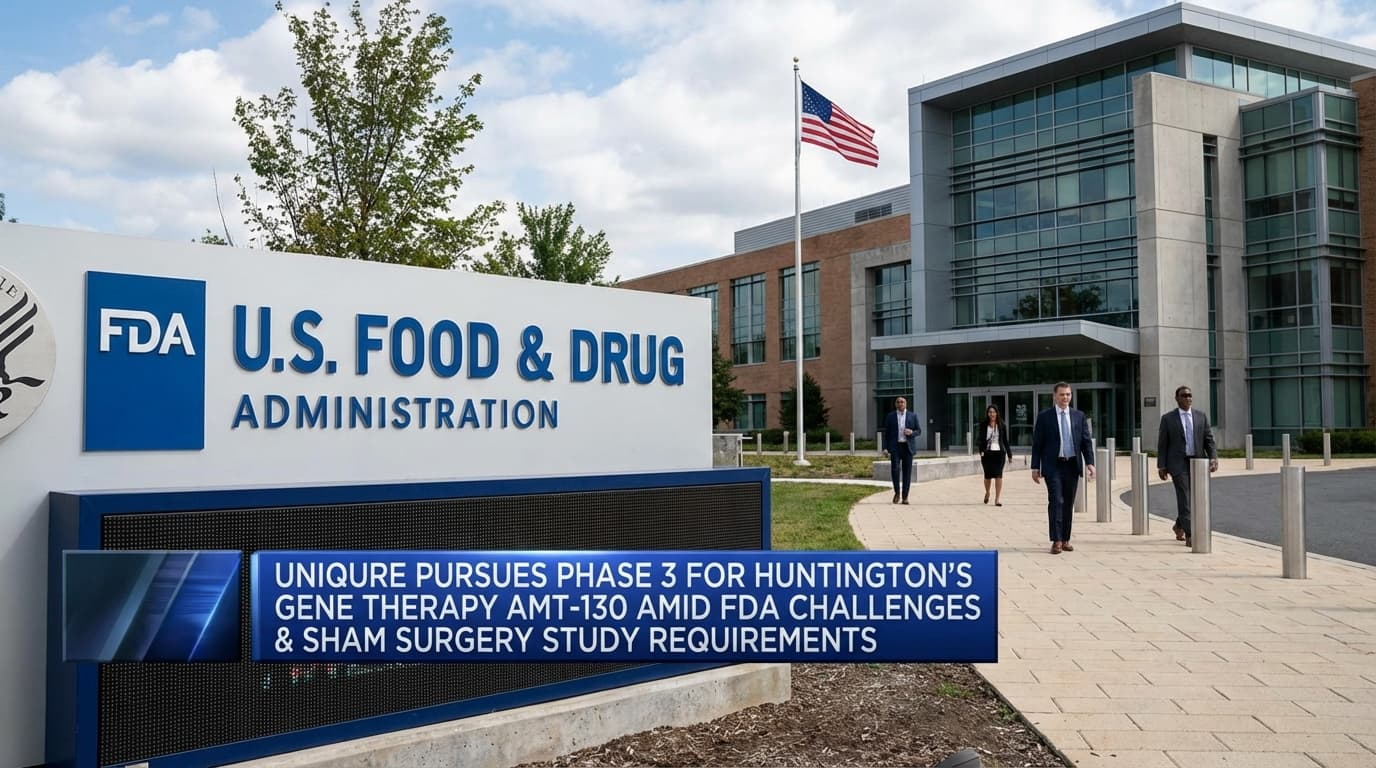
UniQure Pursues Phase 3 for Huntington’s Gene Therapy Amid FDA Challenges

The path to approval for gene therapies is complex, as seen in UniQure’s experience with AMT-130. After critical remarks from FDA Commissioner Marty Makary, UniQure learned from the FDA that additional rigorous clinical trial design, including sham surgery controls, is necessary before regulatory approval can be pursued.
Introduction
Gene therapies hold tremendous promise for treating inherited and currently incurable diseases such as Huntington’s disease, a neurodegenerative disorder. UniQure, a biotech company focused on innovative gene therapies, is navigating the regulatory landscape as it seeks approval for its therapy AMT-130. Despite apparent criticisms from the FDA Commissioner and stringent clinical trial demands, UniQure aims to move forward with Phase 3 development.
Background on AMT-130 and Huntington’s Disease
AMT-130 is a gene therapy designed to target the root genetic cause of Huntington’s disease, which leads to progressive neurological decline. The therapy aims to deliver gene-editing constructs directly to the brain to suppress the faulty HTT gene expression. The potential to alter the disease’s trajectory makes this a key candidate in gene therapy.
Regulatory Challenges
As of early March 2026, FDA Commissioner Marty Makary made remarks in a CNBC interview seemingly critical of AMT-130, expressing concerns about the robustness of the data or regulatory approach. Subsequently, the FDA has communicated to UniQure the need for a sham surgery–controlled study, a rigorous clinical trial design where a placebo surgery is performed on control patients to establish efficacy and safety more definitively.
Implications of Sham Surgery-Controlled Studies
Such studies, while ethically complex, are often essential to demonstrate that therapeutic benefits are due to the treatment itself and not placebo effects. For invasive procedures like gene therapy administered via brain surgery, sham controls provide the gold standard evidence to satisfy regulatory scrutiny. The requirement means UniQure must undertake additional clinical work before submitting the therapy for approval.
UniQure’s Response and Future Prospects
Despite these hurdles, UniQure remains steadfast in planning for Phase 3 trials. The company recognizes the necessity of addressing regulatory demands to ensure that AMT-130’s efficacy and safety profiles are conclusively established. This approach reflects a strategic commitment to patient safety, scientific rigor, and eventual market access.
Broader Context of Gene Therapy Approvals
UniQure’s journey exemplifies the broader challenges in bringing gene therapies to market. Regulatory agencies worldwide are balancing the urgency of delivering breakthrough treatments with the imperative to ensure safety and efficacy through stringent evidence requirements. This often leads to complex trial designs and prolonged development timelines.
Conclusion
UniQure’s pursuit of AMT-130’s Phase 3 clinical development amidst FDA scrutiny and required sham surgery trials highlights the intricacies of gene therapy approval processes. The company's determination to meet these challenges reflects ongoing efforts to bring transformative treatments for devastating diseases like Huntington’s.
Source: UniQure Eyes Phase 3 for Huntington’s Gene Therapy Despite Makary’s Apparent Criticism
Join the BioIntel newsletter
Get curated biotech intelligence across AI, industry, innovation, investment, medtech, and policy—delivered to your inbox.