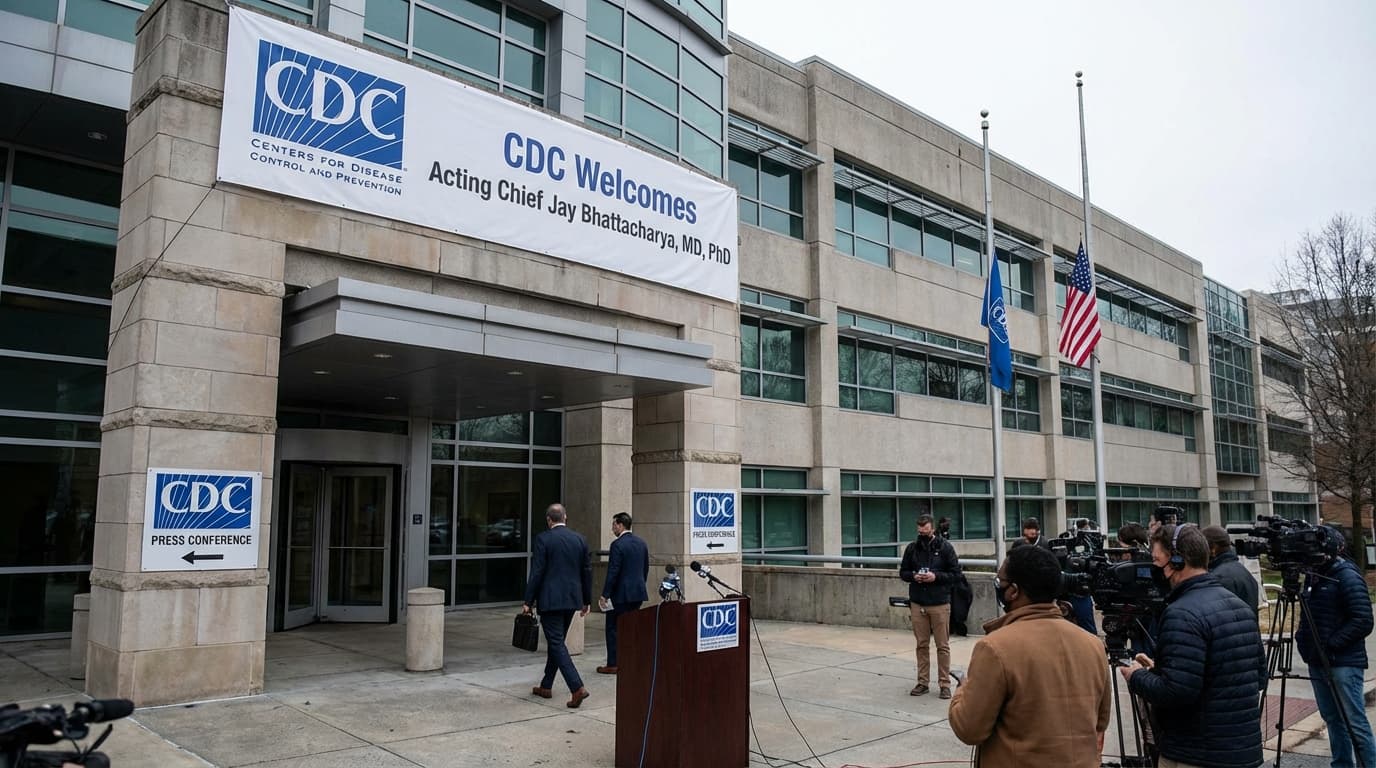
Jay Bhattacharya Assumes Role as Acting CDC Chief: Implications for Public Health Leadership

Following the departure of Jim O’Neill, Jay Bhattacharya steps in as the latest acting CDC chief. This leadership change comes at a critical juncture, with implications for public health policies, agency direction, and the CDC's role in responding to emerging health issues.
The Centers for Disease Control and Prevention (CDC), a cornerstone of American public health infrastructure, has seen another leadership transition with Dr. Jay Bhattacharya stepping in as the acting chief following Jim O’Neill’s recent exit. This move is significant given the CDC’s pivotal role in managing public health crises, guiding disease prevention efforts, and steering national health policies.
Dr. Bhattacharya, whose prior affiliation includes the National Institutes of Health (NIH), brings a distinct set of experiences to the CDC. His appointment, however, comes amid ongoing scrutiny and challenges faced by the agency in recent years, including leadership turnovers, public trust issues, and evolving health threats.
The backdrop to this change reflects an agency in flux, often grappling with the balance between scientific guidance and political pressures. As the acting CDC chief, Bhattacharya inherits the responsibility of stabilizing the agency’s direction during a time when public health preparedness and responsiveness are under the microscope.
Implications for Leadership and Policy:
-
Policy Continuity and Change: Leadership shifts often precipitate reviews of existing policies and strategic priorities. Bhattacharya’s background and public health philosophy will likely influence the CDC’s stance on pressing issues such as infectious disease control, vaccination strategies, and health inequities.
-
Public Confidence: Consistent and transparent leadership is crucial for maintaining public confidence in the CDC. The transition poses challenges in ensuring continuity of communication, responsiveness, and trust with the public and healthcare partners.
-
Interagency Coordination: Given Bhattacharya’s NIH experience, there is potential for enhanced collaboration between major federal health agencies, fostering integrated approaches to research, policy, and public health actions.
-
Navigating Health Crises: The CDC continues to confront complex health emergencies, from emerging infectious diseases to chronic health concerns. Leadership stability and strategic vision will be key in orchestrating effective responses and preparedness initiatives.
Historical Context:
The CDC has experienced multiple leadership changes since mid-2025, reflecting the politically charged environment surrounding public health governance. Bhattacharya will be the third leader since the summer preceding this appointment, underscoring the agency’s volatility at the top.
These transitions occur against a landscape where the CDC’s recommendations and guidance directly impact millions of Americans, making the leadership role critically impactful not just for policy but also for public health outcomes.
Looking Ahead:
As Bhattacharya assumes his responsibilities, stakeholders and observers will be assessing how the agency recalibrates amid heightened demands and expectations. The agency’s ability to restore and preserve trust, deliver clear and actionable guidance, and implement evidence-based health strategies will be central to its future trajectory.
Bhattacharya’s acting tenure may also set the tone for eventual permanent leadership and the broader regulatory posture of the CDC in upcoming years, particularly as new health challenges emerge and public health funding dynamics evolve.
This leadership development highlights the wider context of administration and policy continuity within major federal health institutions—critical factors as the nation prepares for future health threats and strives to optimize health prevention and promotion efforts.
By understanding these dynamics, public health professionals, policymakers, and industry stakeholders can better anticipate shifts and align their efforts with the evolving orientations of the CDC under Bhattacharya’s guidance.
Source: www.biospace.com
This analysis aims to provide a thorough and balanced overview of the leadership change at the CDC, placing it in the broader spectrum of regulatory strategy and public health implications.
Join the BioIntel newsletter
Get curated biotech intelligence across AI, industry, innovation, investment, medtech, and policy—delivered to your inbox.