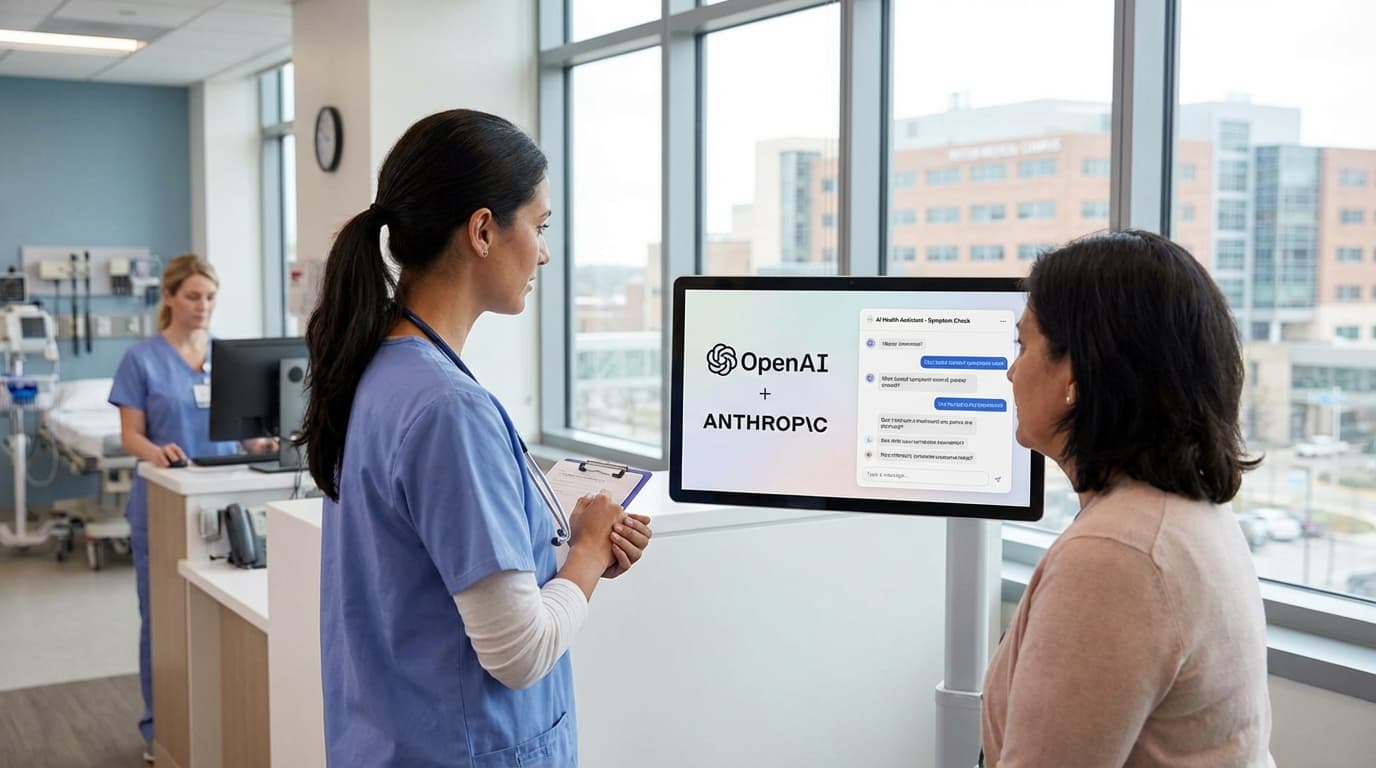
What OpenAI and Anthropic’s Healthcare Push Means for the Industry

The expansion of AI leaders OpenAI and Anthropic into healthcare marks a pivotal shift. AI chatbots are emerging as frontline tools in patient engagement, redefining the patient-provider dynamic and challenging existing health technology frameworks. This blog explores these changes and their broad implications for the healthcare industry.
The fields of healthcare and artificial intelligence have increasingly converged in recent years, but 2026 stands out as a year where this intersection is taking a decisive turn. Leading technology innovators OpenAI and Anthropic are deepening their focus on healthcare applications, bringing AI chatbots to the forefront as primary touchpoints for patients seeking medical assistance.
These developments represent a transformation in the patient journey, as AI chatbots evolve from simple query tools into sophisticated advisors capable of initial diagnosis guidance, symptom assessment, and directing patients toward appropriate care resources. This transition is not merely an incremental improvement but a structural change that affects the very foundation of how healthcare is accessed and delivered.
Health tech startups are responding dynamically to this changing landscape. Many find themselves compelled to pivot their product offerings or forge strategic partnerships with AI leaders to maintain competitiveness. For some startups, this AI-driven shift offers opportunities for innovation and expansion, while for others, it introduces new competitive pressures and challenges in differentiation.
The patient-provider relationship is being redefined in profound ways. Traditionally anchored in direct interactions, often face-to-face, this relationship now accommodates AI intermediaries that can streamline care coordination, provide continuous monitoring, and even personalize health interactions using patient data. While these AI agents can enhance efficiency and accessibility, they also raise questions about preserving empathy, trust, and human connection in care.
Central to the debate surrounding this technological upheaval are concerns related to safety, privacy, and accountability. The integration of AI chatbots into healthcare involves handling sensitive patient information, necessitating robust safeguards against data breaches and misuse. Additionally, questions arise regarding the reliability of AI-generated medical advice and the mechanisms for addressing errors or harm resulting from AI guidance.
Policymakers, industry stakeholders, and patient advocacy groups are actively engaged in discussions to establish standards and regulations that balance innovation with protection. The challenge lies in crafting a framework that encourages AI adoption while ensuring ethical considerations and patient welfare are prioritized.
In conclusion, the healthcare push by OpenAI and Anthropic symbolizes a new era where AI-powered tools become an intrinsic part of medical care. This evolution presents opportunities for enhanced care access and efficiency but also requires careful navigation of complex ethical, legal, and social issues. The coming years will be critical in determining how these technologies shape the future of medicine and patient experience.
Source: MedCity News
Join the BioIntel newsletter
Get curated biotech intelligence across AI, industry, innovation, investment, medtech, and policy—delivered to your inbox.