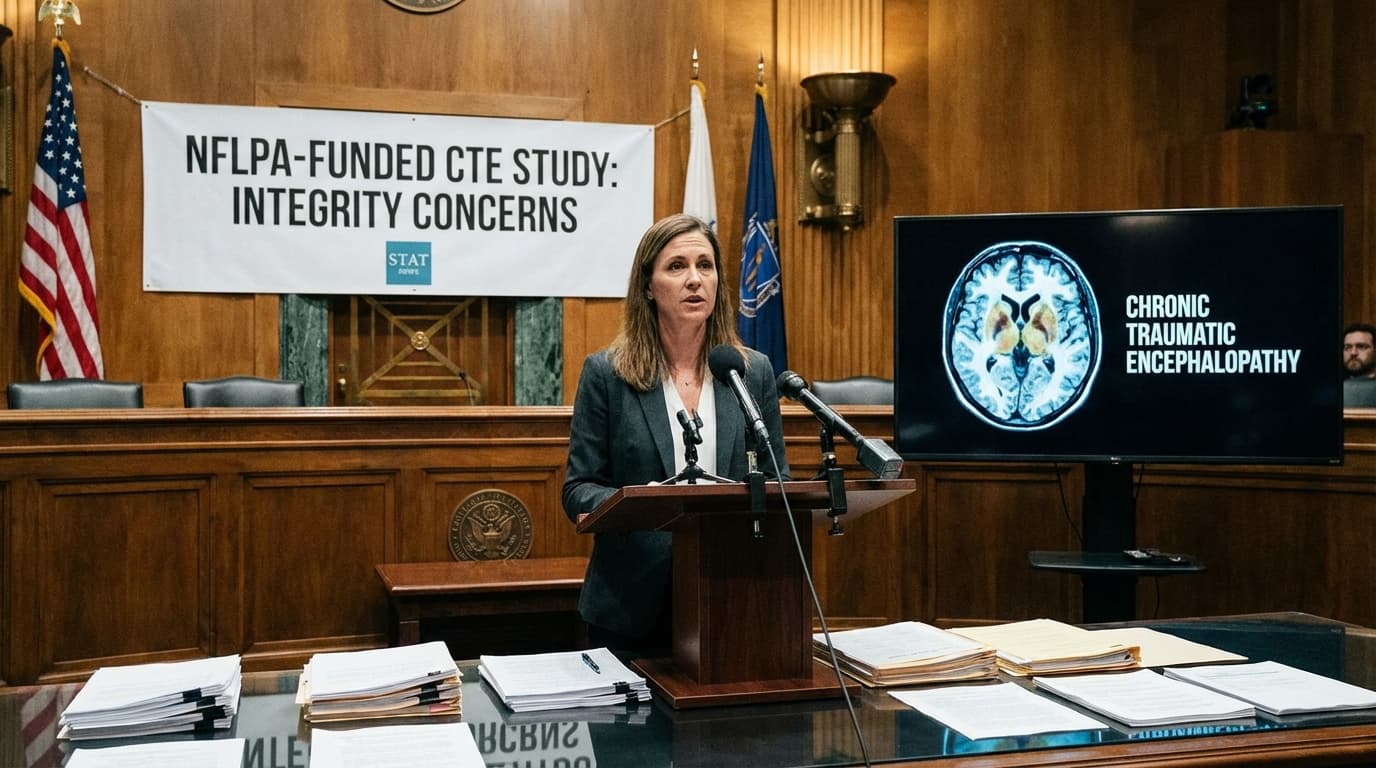
Controversy Erupts Over NFL Players Association-Backed CTE Study

The recent NFL Players Association-funded study on chronic traumatic encephalopathy (CTE) has sparked fierce criticism. A prominent scientist and NFL widow highlights concerns about the study's findings and implications, calling attention to the ongoing challenges of accurately understanding and addressing CTE among football players.
Chronic traumatic encephalopathy (CTE) continues to be a significant concern within sports medicine, especially in contact sports such as American football. The contentious nature of this disease—linked to repeated head traumas—has sparked extensive research efforts but also controversies, particularly regarding study sponsorship and interpretations.
A recent study funded by the National Football League Players Association (NFLPA) has come under fire from Eleanor M. Perfetto, a scientist and widow of an NFL player who suffered from this debilitating condition. Her critique sheds light on broader issues concerning the research landscape, the pressures of vested interests, and the real human suffering behind statistical analyses.
Perfetto’s dual perspective as both a scientist and someone personally touched by the tragic consequences of CTE lends weight to her condemnation of the study. She expressed being both “disgusted” by the scientific approach and “furious” as an NFL widow who witnessed unimaginable suffering. This emotional and intellectual response highlights the complex interface between scientific inquiry and lived experience.
While the NFLPA’s involvement reflects an attempt by the players’ union to address concerns proactively, the potential for conflicts of interest and biased outcomes cannot be overlooked. Researchers dependent on funding from organizations with a stake in football’s public image may face implicit or explicit pressures that affect study design, data interpretation, and reporting.
The implications of CTE extend beyond academic interest, as they affect player health policies, insurance, legal actions, and public perception of the sport. A thorough and unbiased understanding of the disease’s mechanisms, prevalence, and outcomes is essential to formulating effective protective measures, treatment protocols, and support systems for affected athletes.
Perfetto’s critique also underscores the ethical imperative to incorporate diverse voices, including those of impacted families, in the research dialogue. Their perspectives enrich the scientific conversation by grounding it in real-world consequences.
Going forward, independent research free from conflicts of interest, greater transparency, and cross-disciplinary collaborations will be necessary to advance CTE knowledge. Only then can the sports community and healthcare providers adequately safeguard the well-being of athletes and honor the memories of those like Perfetto’s late husband.
For those interested in exploring the detailed critique and context, the original article can be found here: Super Bowl CTE NFLPA Study Critique.
Join the BioIntel newsletter
Get curated biotech intelligence across AI, industry, innovation, investment, medtech, and policy—delivered to your inbox.