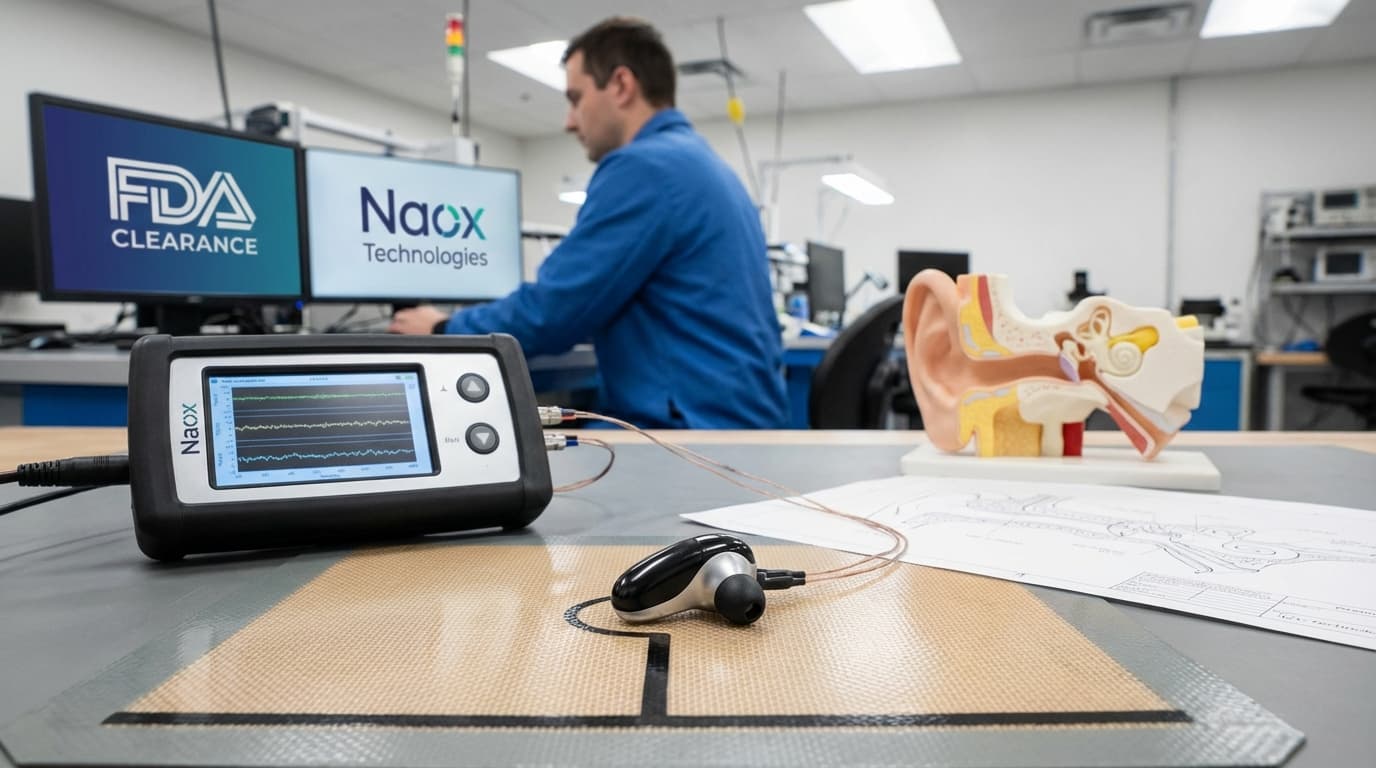
French Startup Naox Technologies Secures FDA Clearance for Revolutionary In-Ear EEG Device

This groundbreaking in-ear EEG system promises to transform monitoring and care for neurological conditions such as epilepsy, Alzheimer's disease, and sleep disorders by enabling brain activity capture in everyday environments, which traditional scalp EEG systems often fail to achieve.
Neurological disorders are complex and often require continuous monitoring of brain activity to enhance diagnosis, treatment, and patient outcomes. Traditional electroencephalogram (EEG) devices rely on scalp-based electrodes, which, while effective, have limitations in terms of user comfort, practical continuous use, and capturing brain signals outside clinical settings. Naox Technologies, a pioneering French company, has recently announced a landmark achievement in this space, becoming the first to obtain FDA 510(k) clearance for an in-ear EEG device.
This clearance marks a critical step forward in brain healthcare technology, enabling a new modality of brain monitoring that is less intrusive and more adaptable to real-world use cases. Unlike conventional EEG systems that necessitate wearing cumbersome headgear attached to the scalp, Naox's in-ear device fits discreetly within the ear canal, offering a more comfortable and unobtrusive solution for patients.
The potential applications for this in-ear EEG technology are broad and impactful. Key areas targeted include epilepsy monitoring, where capturing seizure activity in everyday environments can be challenging yet crucial to management; Alzheimer's disease, where tracking neurological changes over time can assist early diagnosis and intervention; and sleep disorders, where continuous monitoring is vital for accurate assessment and therapy adjustment.
One of the unique strengths of this system stems from its ability to detect brain activity signals in situations where traditional scalp EEGs might be limited. The in-ear location offers proximity to certain neural signals that scalp electrodes might miss due to interference, movement, or setup constraints. This capability allows for more accurate, real-time data collection as patients go about daily activities, opening opportunities for earlier detection of neurological anomalies and more personalized treatment adjustments.
FDA 510(k) clearance indicates that Naox's device has demonstrated substantial equivalence to legally marketed predicate devices regarding safety and effectiveness. This regulatory milestone not only validates the technological rigor behind the device but also facilitates its commercial introduction into the U.S. healthcare market, where advanced neurological monitoring is in growing demand.
The implications for patients, healthcare providers, and researchers are profound. Patients stand to benefit from enhanced comfort and convenience, reducing barriers that often prevent prolonged EEG monitoring. Clinicians may receive richer data sets that better reflect patients' neurological status in naturalistic settings instead of limited clinical snapshots. Researchers can utilize continuous long-term brain activity data to uncover novel biomarkers and insights into brain function and disease progression.
As neurological diseases continue to pose significant public health challenges worldwide, innovations like Naox's in-ear EEG device exemplify how medical technology can evolve to meet unmet needs. They pave the way for more holistic, patient-centric approaches to neurological care, emphasizing continuous monitoring and early intervention.
Going forward, broader adoption of in-ear EEG technology may also facilitate integration with other wearable health devices, telemedicine platforms, and digital health ecosystems, amplifying its impact on brain health management. Furthermore, ongoing studies and real-world evidence collection post-clearance will be essential to optimize device protocols, user experience, and clinical workflows.
Naox Technologies’ achievement not only reflects the convergence of engineering ingenuity and clinical insight but also sets the stage for a new era in brain healthcare innovation, one where technology aligns closely with patients’ lifestyles and real-world needs.
For further details, please refer to the original report on MedCity News: French Startup Gains FDA Clearance for First In‑Ear EEG Device.
Join the BioIntel newsletter
Get curated biotech intelligence across AI, industry, innovation, investment, medtech, and policy—delivered to your inbox.