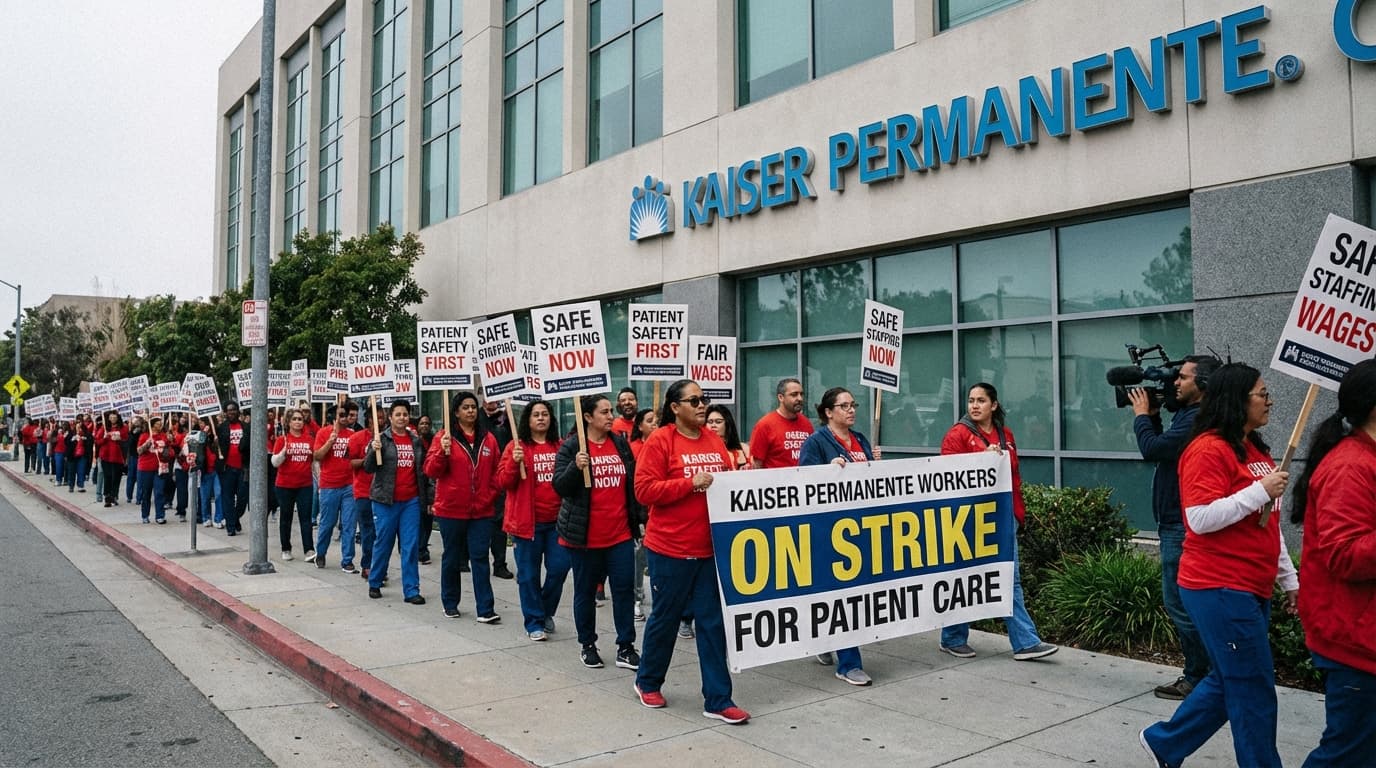
Why 31,000 Kaiser Permanente Workers Are Striking — Again

In early 2026, a major strike by Kaiser Permanente’s healthcare workforce has brought attention to persistent challenges in the healthcare system, including staffing shortages and the struggle to balance patient care with sustainable working conditions. This detailed analysis explores the background, causes, and potential implications of the strike for the healthcare sector.
In January 2026, approximately 31,000 healthcare workers employed by Kaiser Permanente initiated an open-ended strike. This significant labor action primarily unfolded across numerous hospitals and clinics in California and Hawaii, representing a formidable demonstration of worker dissatisfaction within one of the nation’s largest integrated healthcare systems. The strike underscores a set of critical issues that have long beleaguered healthcare delivery, including staffing shortages, inadequate wages, barriers to care access, and escalating concerns about patient safety and provider burnout.
Background and Context
Kaiser Permanente has a workforce comprising tens of thousands of healthcare professionals, including nurses, technicians, and support staff who directly influence the quality of care delivered to patients. Over recent years, these workers have expressed growing frustration with conditions that they argue compromise their ability to deliver safe and effective care. The ongoing tensions culminated in this 2026 strike, which builds on previous labor disputes at Kaiser Permanente.
Core Issues Driving the Strike
The principal grievances fueling the strike fall into several intertwined categories:
-
Staffing Shortages: Healthcare workers cite insufficient staffing as a critical problem leading to excessive workloads and elevated stress levels. Inadequate staffing not only affects workers’ well-being but also threatens patient safety by increasing the risk of errors and limiting the time available for thorough patient care.
-
Wages and Compensation: Workers contend that their wages have not kept pace with the demands of their roles or the rising cost of living, exacerbating financial pressures and contributing to dissatisfaction.
-
Care Access: Access to care has been constrained, they argue, by operational decisions and shifting priorities within the health system, affecting patient outcomes and community health.
These complaints coalesce into a larger narrative about the strain on healthcare workers and the system’s capacity to meet the needs of patients effectively.
Dispute Dynamics
Kaiser Permanente management has placed part of the blame for the stalled contract negotiations on union demands, suggesting that the disagreements are a product of differing negotiation stances. Conversely, the workers and their representatives portray the strike as a response to deeper systemic concerns that go beyond simple contractual issues, emphasizing the urgency of addressing fundamental challenges that impact healthcare delivery.
Implications for Healthcare
The strike at Kaiser Permanente illuminates broad challenges facing the healthcare sector, particularly in large, integrated delivery systems. It signals ongoing tensions between labor forces advocating for safe, fair working environments and management teams balancing operational viability and cost containment.
This labor dispute also raises important questions about how healthcare institutions can maintain or improve care quality amid workforce dissatisfaction and resource limitations. Patient safety and outcome measures may be at risk during such prolonged labor actions, while longer-term effects on healthcare staffing pipelines and institutional reputations cannot be discounted.
Wider Industry Context
Kaiser Permanente is not alone in facing labor unrest linked to staffing and care delivery challenges. Across healthcare systems nationally and globally, workers are increasingly vocal about burnout and systemic pressures intensified by demographic shifts, technological changes, and evolving patient expectations.
Sustained dialogue between healthcare employers, workers, policymakers, and stakeholders will be essential to forge pathways that reconcile workforce welfare with patient care imperatives.
Conclusion
The 2026 strike by Kaiser Permanente workers vividly highlights the complex and interrelated issues of staffing, wages, and care access in contemporary healthcare. It serves as a critical case study for understanding labor relations in healthcare and frames the conversation around systemic reforms needed to foster safe, sustainable, and equitable healthcare environments.
For more detailed coverage on this evolving story, please refer to the original reporting: Why 31,000 Kaiser Permanente Workers Are Striking — Again.
Join the BioIntel newsletter
Get curated biotech intelligence across AI, industry, innovation, investment, medtech, and policy—delivered to your inbox.