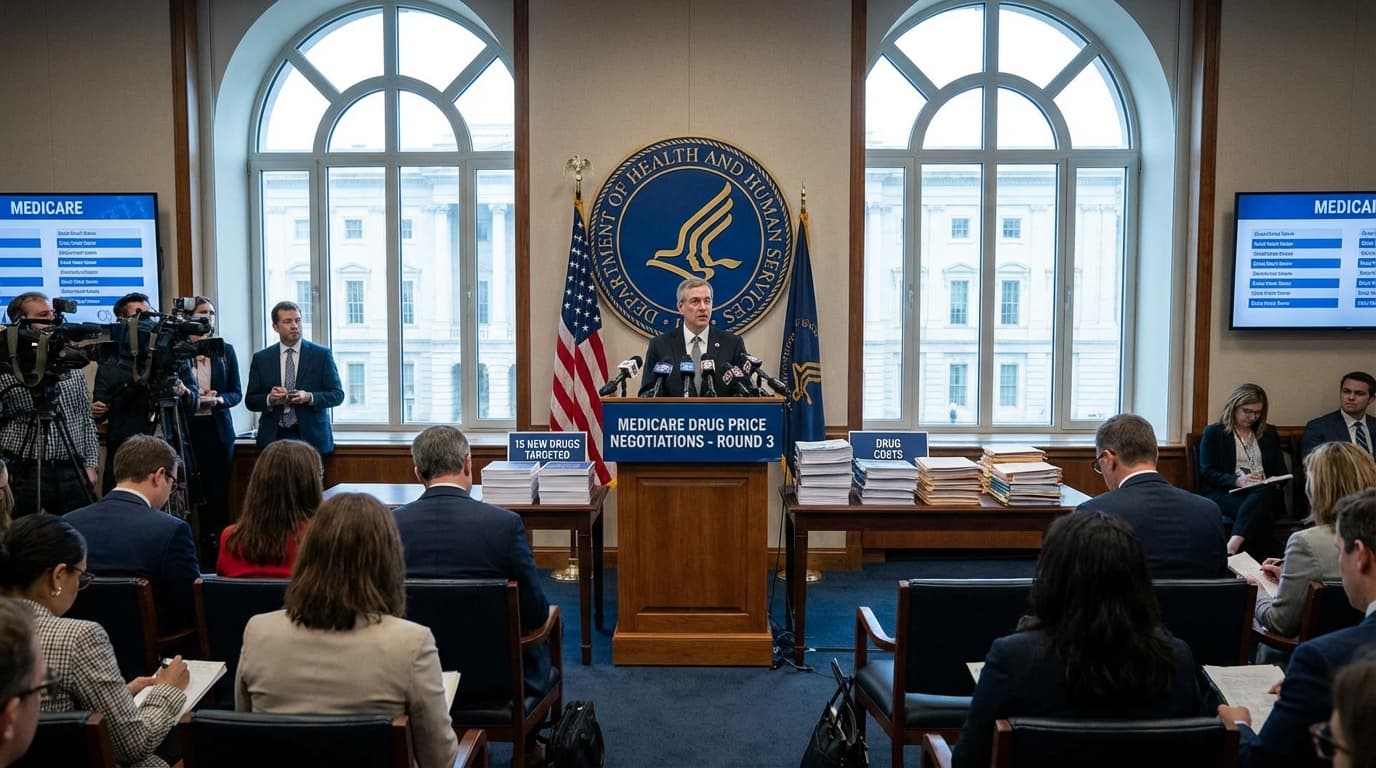
15 New Drugs Added to Medicare Price Negotiations Highlight Expanding Efforts to Control Drug Costs

The recent announcement by the Trump administration introduces 15 additional drugs into the Medicare price negotiation process. This includes, for the first time, treatments administered in doctors' offices, marking a significant expansion in the government's approach to controlling drug spending within Medicare. This policy development could have wide-reaching implications for patients, providers, and pharmaceutical companies.
The Trump administration unveiled a pivotal expansion in Medicare drug price negotiations, now targeting 15 additional drugs in its third round of negotiations. This list is notable for including, for the first time, drugs administered in practitioners' offices — signaling a broader approach toward reducing drug spending across various treatment settings.
Medicare price negotiations have become a key mechanism in the administration’s efforts to combat rising drug costs that burden the federal health program. By setting target prices for specific high-cost medications, Medicare aims to exert downward pressure on prices, potentially resulting in significant savings for both patients and taxpayers.
The inclusion of drugs administered in doctors’ offices under this negotiation framework represents a new frontier, reflecting the government's strategy to cover a broader scope of drug use outside traditional retail pharmacy settings. This could affect a range of specialty drugs and treatments that are often costly and essential for patients with complex conditions.
While details about which specific drugs have been added have not been fully disclosed, the expansion reaffirms the administration's commitment to leveraging Medicare's purchasing power. It also underscores ongoing tensions with pharmaceutical companies around pricing policies and the balance between innovation incentives and affordability.
Industry stakeholders are closely watching how these negotiations will unfold, particularly as the government moves closer to finalizing prices and implementing negotiated rates in future Medicare Part B and Part D plans. The negotiations are likely to influence drug listing decisions, formulary management, and prescribing behaviors.
For beneficiaries, successful negotiations could enhance access to essential medications by lowering out-of-pocket costs. For the Medicare program, these negotiations align with broader federal goals of sustainable healthcare spending.
This latest action builds on prior rounds of drug price negotiations and represents an important chapter in federal health policy around pharmaceutical pricing transparency and control.
This development merits ongoing attention when assessing the evolution of drug pricing regulations and the future landscape of Medicare-covered treatments.
For more detailed information and sources about this policy update, please refer to the original announcement and analysis at STAT News: 15 new drugs added to Medicare price negotiations.
Join the BioIntel newsletter
Get curated biotech intelligence across AI, industry, innovation, investment, medtech, and policy—delivered to your inbox.