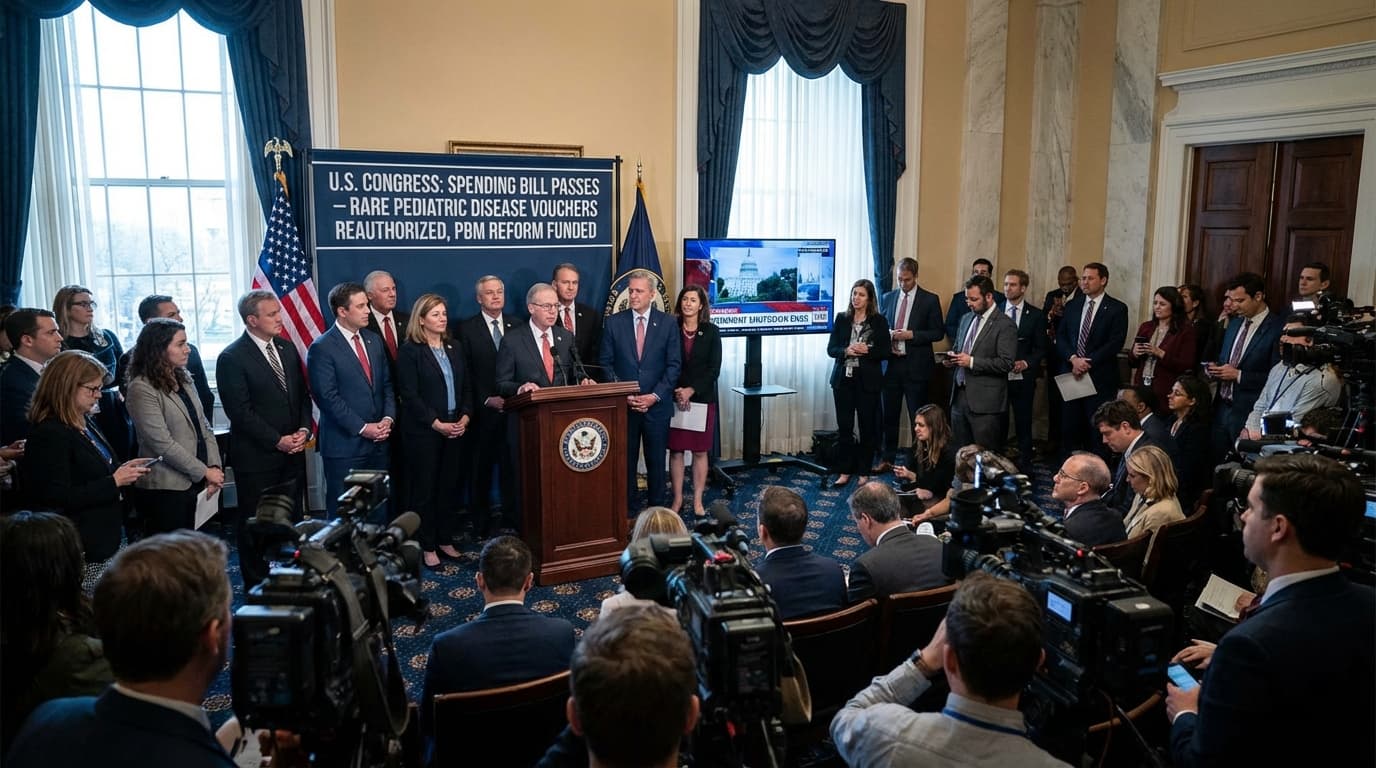
Rare Pediatric Disease Vouchers Reauthorized Alongside PBM Reform in Narrowly Passed U.S. Spending Bill

In a recent legislative development, the U.S. President signed a spending package into law that includes the reauthorization of the FDA's rare pediatric disease priority review voucher program, a key initiative incentivizing drug development for rare diseases affecting children. Additionally, the bill funds reforms targeted at pharmacy benefit managers (PBMs), marking a significant policy shift with potential wide-reaching implications for drug approval processes and the pharmaceutical supply chain.
The recent passage of a U.S. spending package that narrowly passed in Congress marks an important milestone in healthcare policy and pharmaceutical regulation. A major feature of the legislation, signed into law by President Donald Trump, is the reauthorization of the FDA's rare pediatric disease priority review voucher program. This program had previously stalled but now receives renewed governmental support, underscoring its perceived value in accelerating the development and review of therapies for pediatric rare diseases.
Background on the Voucher Program
The rare pediatric disease priority review voucher program was designed as an incentive mechanism to encourage pharmaceutical companies to invest in developing treatments for rare diseases that disproportionately affect children. Rare pediatric diseases often represent orphan conditions with small patient populations, which can diminish financial incentives for drug development. The program offers a priority review voucher to companies that bring a drug for such a disease to market. These vouchers can shorten FDA review times for future drugs, enhancing their commercial value.
Legislative Context and Renewed Support
After encountering delays and stalling in recent years, the reauthorization in this spending bill signifies a government commitment to sustain incentives that advance rare pediatric disease treatment options. Alongside this, the legislation also addresses reforms in the pharmacy benefit manager (PBM) system. PBMs act as intermediaries managing drug benefits for insurers and employers, and their practices have been the subject of scrutiny regarding pricing transparency and cost management.
Implications for Stakeholders
For pharmaceutical developers, the renewed voucher program continues to provide an opportunity to accelerate drug review timelines, potentially bringing crucial therapies to patients faster while creating a tradable asset that can support corporate financial strategies. For patients and advocacy groups focused on rare pediatric diseases, the reauthorization offers hope for ongoing investment into novel treatments for conditions that historically have limited options.
Meanwhile, the PBM reforms funded through this bill aim to improve aspects of the drug supply chain that affect pricing and access. Reform initiatives could enhance transparency and regulate some of the mechanisms through which drugs are reimbursed and purchased, potentially affecting drug affordability and insurer strategies.
Ending the Partial Government Shutdown
The passage of this spending package also ended a three-day partial government shutdown, alleviating uncertainties and disruptions in government functions, including FDA operations. Resumption of full government activities is expected to support regulatory review processes, including for drugs associated with the voucher program.
Broader Regulatory and Policy Considerations
This legislative action is emblematic of ongoing U.S. government efforts to balance incentives for pharmaceutical innovation with mechanisms aimed at controlling drug costs and improving transparency in healthcare spending. The intersection of rare disease drug development and PBM reform presents both opportunities and challenges for stakeholders across the healthcare ecosystem.
Conclusion
The reauthorization of the rare pediatric disease priority review voucher program, coupled with PBM reform funding within a narrowly passed spending bill, represents a significant policy event with potential to impact drug development landscapes, healthcare economics, and patient access to novel therapies. The renewed government backing of this voucher program and related reforms highlights a continuing commitment to fostering innovation while addressing systemic healthcare challenges.
For further information, see the original announcement at BioSpace: Rare Pediatric Disease Vouchers Reauthorized, PBM Reform Funded in Narrowly Passed Spending Bill.
Join the BioIntel newsletter
Get curated biotech intelligence across AI, industry, innovation, investment, medtech, and policy—delivered to your inbox.