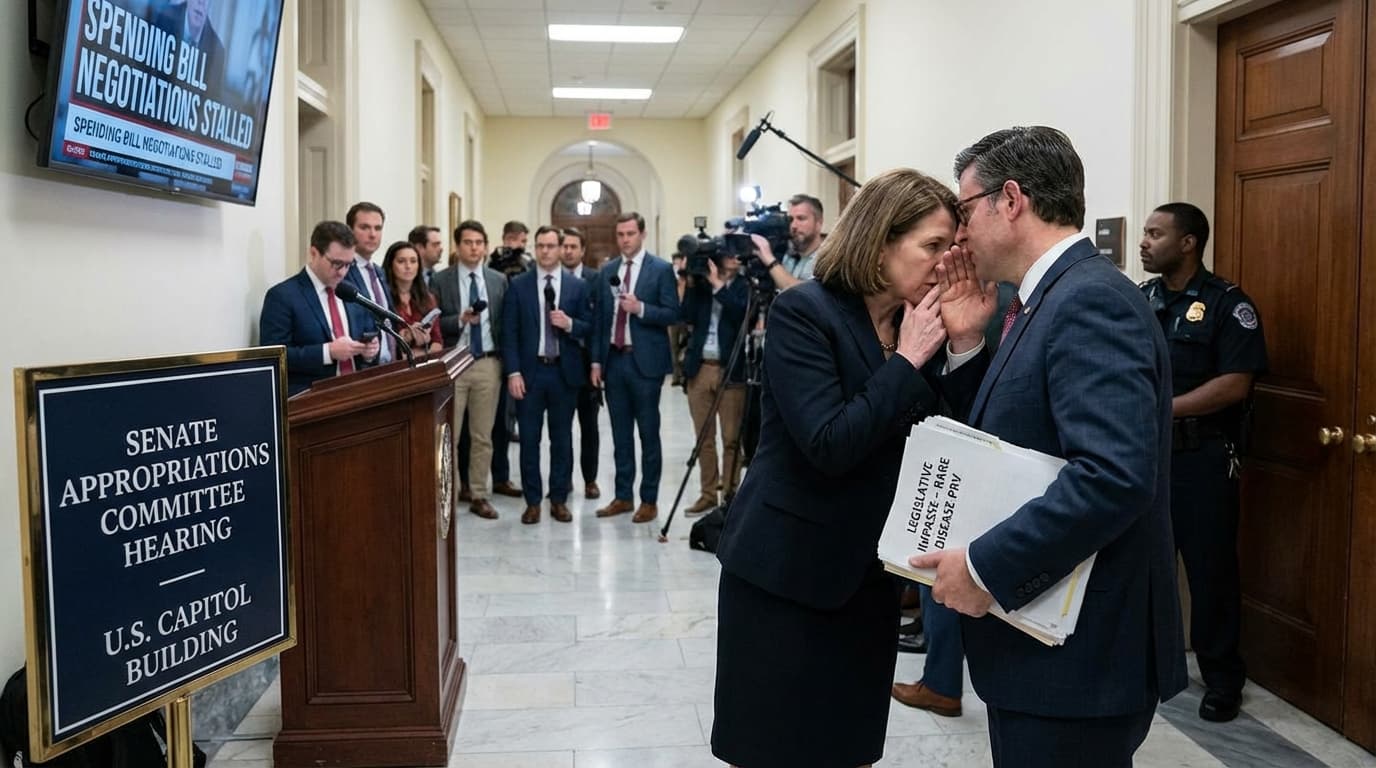
Senate Spending Bill Collapse Entangles Rare Pediatric Disease Voucher Program

The Senate's inability to pass a comprehensive spending package has placed the rare pediatric disease priority review voucher program in limbo, as the bill also encompasses controversial funding for federal immigration enforcement. This regulatory challenge highlights the complexities of healthcare policy-making interwoven with broader political debates and raises questions about future support for rare disease initiatives.
On January 29, 2026, the U.S. Senate failed to pass a substantial spending bill that notably included the rare pediatric disease priority review voucher (PRV) program. The legislative failure stemmed from opposition tied to provisions financing Immigration and Customs Enforcement's (ICE) large-scale crackdown operations in Minnesota and additional states.
The rare pediatric disease PRV program has long been supported widely in the biopharmaceutical community as a critical incentive to spur drug development for conditions affecting small pediatric populations. This program grants companies priority review vouchers that can accelerate FDA review times or be sold, fostering investment and innovation in rare disease therapeutics.
However, the linkage of the PRV program to broader political funding for ICE enforcement created a contentious environment impeding the passage of the omnibus spending package. Stakeholders have expressed concern that delays or uncertainty in renewing the PRV program could slow progress in rare disease treatments, which rely heavily on such legislative incentives.
This legislative setback underscores the sensitivity and complexity inherent in policy decisions where healthcare initiatives become intertwined with broader socio-political issues. For researchers, developers, and patient advocates, the outcome reinforces the challenge of maintaining focused support for biomedical innovation amid partisan battles.
Additionally, the failure to secure funding extends beyond the PRV to impact various federal agency budgets, thus potentially affecting programmatic operations in public health sectors.
The situation invites reflection on how best to structure rare disease incentive programs to withstand political headwinds and maintain momentum in addressing unmet medical needs in pediatric populations.
From a regulatory and policy perspective, the case exemplifies the intricate balance policymakers must achieve between health priorities, budget allocations, and the wider political landscape.
Patient communities dependent on continued innovation for rare diseases often experience the consequences of such legislative stalemates. The uncertainty could affect timelines for new therapies reaching those in need, underscoring the vital role stable policy frameworks play in drug development ecosystems.
Moving forward, stakeholders including lawmakers, industry participants, and advocacy groups may need to explore alternative legislative strategies or bipartisan efforts to decouple critical health programs from contentious appropriations to ensure their continuity.
Overall, the Senate's failure to pass this comprehensive spending bill serves as a poignant reminder of how interconnected policy domains can complicate support for essential biomedical incentives, urging renewed focus on safeguarding pathways that enable rare disease advancements.
Source: BioSpace
Join the BioIntel newsletter
Get curated biotech intelligence across AI, industry, innovation, investment, medtech, and policy—delivered to your inbox.