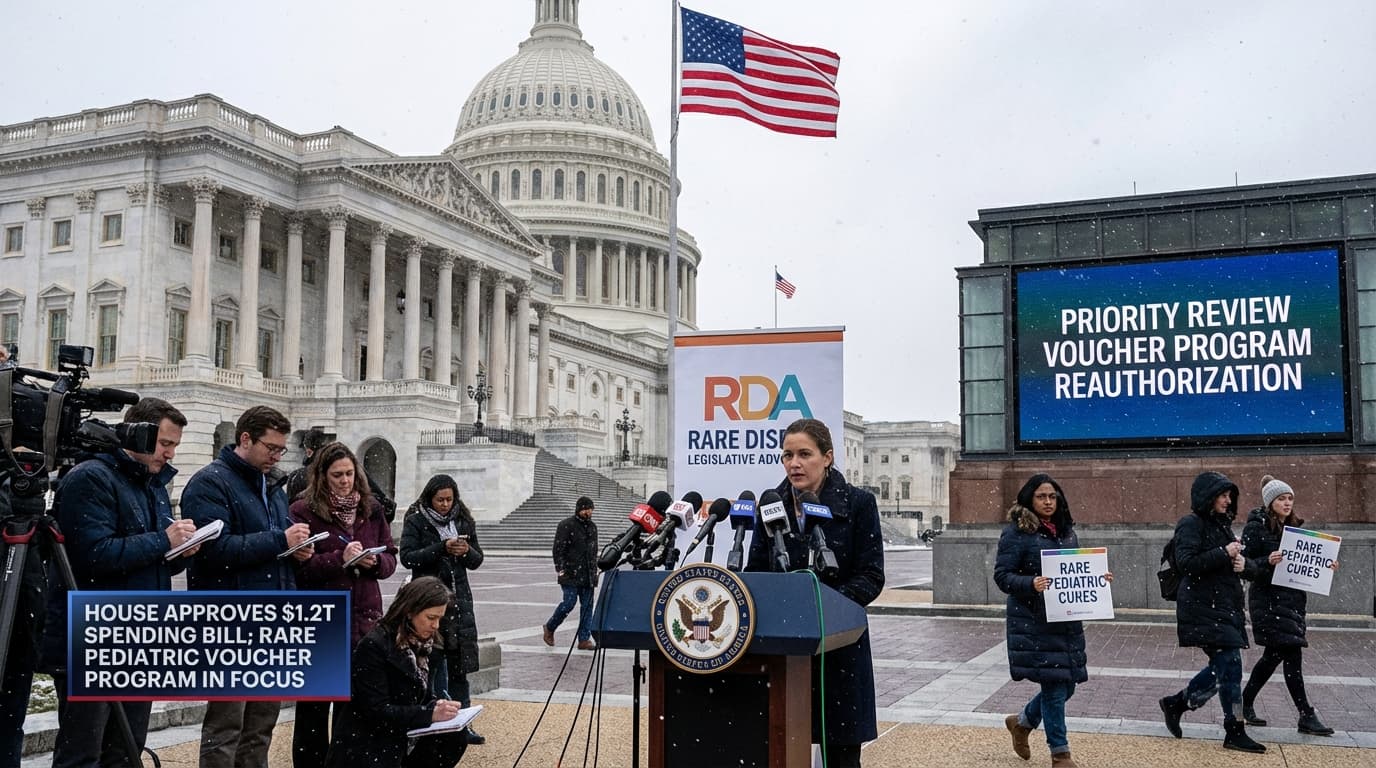
Spending Bill Clears House, Keeping Priority Review Voucher Hopes Alive

The rare pediatric disease priority review voucher program, a key FDA initiative designed to incentivize drug development for rare pediatric diseases, faced uncertainty after missing reauthorization in 2024. The recent House spending bill vote signals potential for revival as the bill moves to the Senate.
In January 2026, the House of Representatives cleared a significant $1.2 trillion budget package that not only covers critical government funding but also sparks new hope for the rare pediatric disease priority review voucher program. This federal program, which had struggled since its missed reauthorization in 2024, provides important incentives for pharmaceutical companies to develop treatments targeting rare pediatric diseases—conditions that often lack adequate therapeutic options due to small patient populations and complex challenges in clinical development.
The journey of this voucher program has been fraught with political difficulties. Despite broad advocacy support, the program's renewal was stalled at the end of 2024, creating uncertainty in the biotech and pharmaceutical sectors that focus on rare diseases. This delay introduced risks for ongoing and future drug development projects relying on the incentives offered through priority review vouchers. These vouchers grant accelerated FDA review timelines, a valuable asset that can expedite market entry and reduce development costs.
The inclusion of the vouchers-related provisions in the new spending bill signals bipartisan attention to the importance of fostering innovation in the rare pediatric disease space. As the bill moves to the Senate for further consideration, stakeholders remain cautiously optimistic that the program’s reauthorization will be finalized, thus maintaining momentum for the development of therapies in areas with significant unmet medical need.
Industry experts highlight that programs like these are essential for continuing progress in orphan drug development, which has increasingly become a focus within biopharma innovation due to its potential for impactful patient benefits and new market opportunities. The voucher program complements other legislative measures aimed at encouraging investment in rare condition treatments, reflecting a broader commitment to advancing public health priorities through targeted policy measures.
As this legislative process unfolds in 2026, the broader implications for research investment, patient advocacy, and drug development strategies continue to evolve. The potential reauthorization of the priority review voucher program could reshape timelines and incentives for rare disease drug developers, ultimately influencing the availability of new therapies for critical pediatric conditions.
For more detailed insights on the policy developments and the future outlook of the rare pediatric disease priority review voucher program, refer to the full report at BioSpace.
Join the BioIntel newsletter
Get curated biotech intelligence across AI, industry, innovation, investment, medtech, and policy—delivered to your inbox.