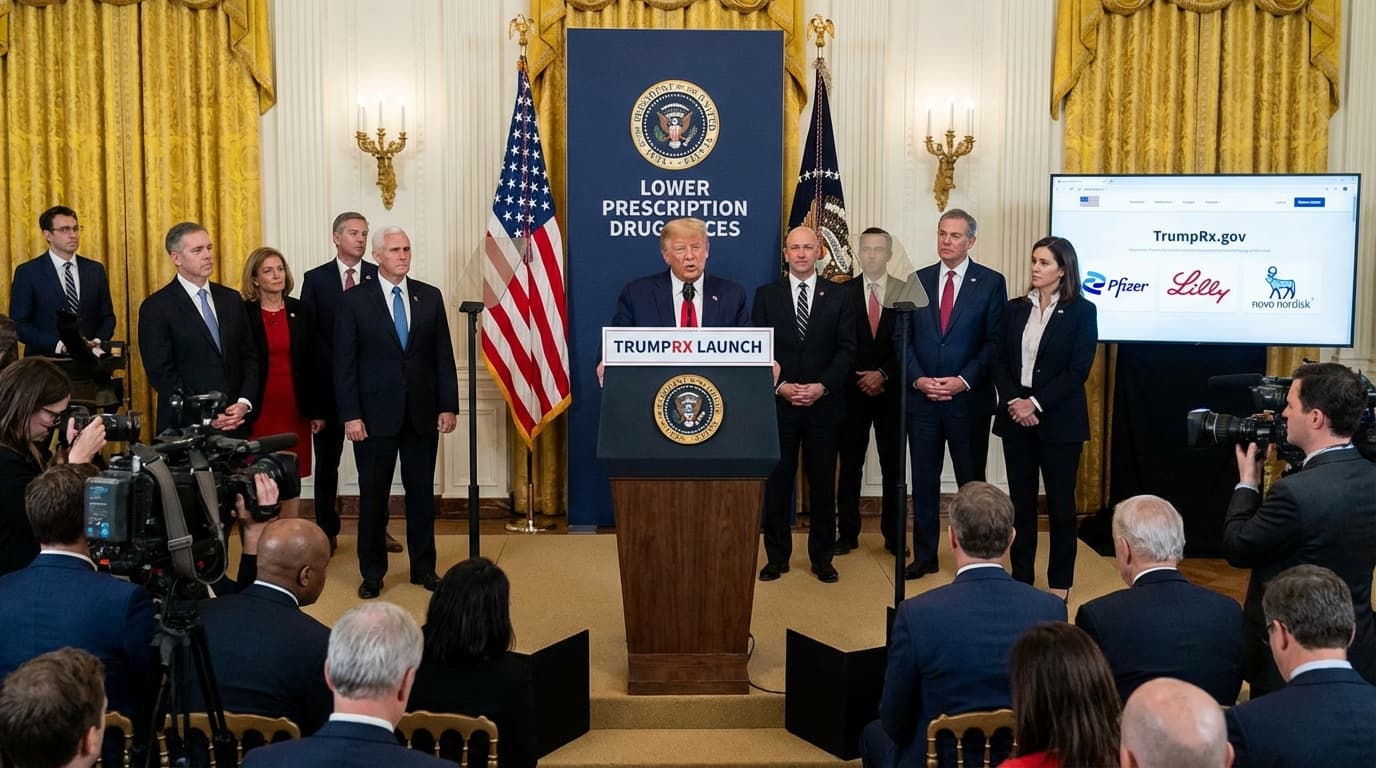
TrumpRx Launch: Examining the New Prescription Drug Platform and Its Market Impact

The TrumpRx platform represents a significant policy and market intervention in the pharmaceutical distribution landscape. By providing discounted access to drugs from major manufacturers, the platform aspires to influence drug pricing dynamics and consumer accessibility, though industry observers remain cautious about its long-term effects.
The prescription drug marketplace in the United States is complex and often criticized for high prices and limited consumer access. In this context, the Trump administration has introduced TrumpRx, a new direct-to-consumer pharmaceutical sales platform. The official launch, originally delayed, is now set to provide consumers with the opportunity to purchase medications online at discounted rates.
TrumpRx is designed to feature products from prominent pharmaceutical companies, including Eli Lilly, Pfizer, Novo Nordisk, and Amgen among others. The platform intends to leverage the buying power and distribution efficiencies of the federal government to negotiate lower prices and pass the savings directly to consumers.
This initiative arises amidst ongoing debates about prescription drug pricing and the roles of manufacturers, pharmacy benefit managers (PBMs), insurers, and retailers within the supply chain. By directly connecting consumers to discounted medications, TrumpRx aims to bypass intermediaries that have been implicated in driving up costs.
However, the effectiveness and impact of TrumpRx remain subjects of scrutiny. Analysts point out potential challenges such as the platform's limited selection compared to traditional pharmacies, insurance coverage complexities, and whether manufacturers’ participation will be sustained over time.
Furthermore, there is debate over whether such federal interventions will disrupt established pharmaceutical market dynamics or simply coexist alongside existing systems. The platform’s success depends on consumer adoption, regulatory compliance, and the balance between accessibility and affordability.
From a policy perspective, TrumpRx highlights an approach focused on direct government involvement in pharmaceutical sales as a mechanism to address affordability barriers. This contrasts with proposals for systemic reforms such as drug price negotiation powers for Medicare, drug importation, or changes in patent law.
As TrumpRx rolls out, researchers and market watchers will be closely monitoring its user experience, pricing impact, supply chain integration, and influence on broader drug pricing trends.
For a comprehensive overview and analysis of TrumpRx’s introduction and potential implications, refer to the source at BioSpace: TrumpRx Website Set To Launch Thursday Evening After Delay.
Join the BioIntel newsletter
Get curated biotech intelligence across AI, industry, innovation, investment, medtech, and policy—delivered to your inbox.