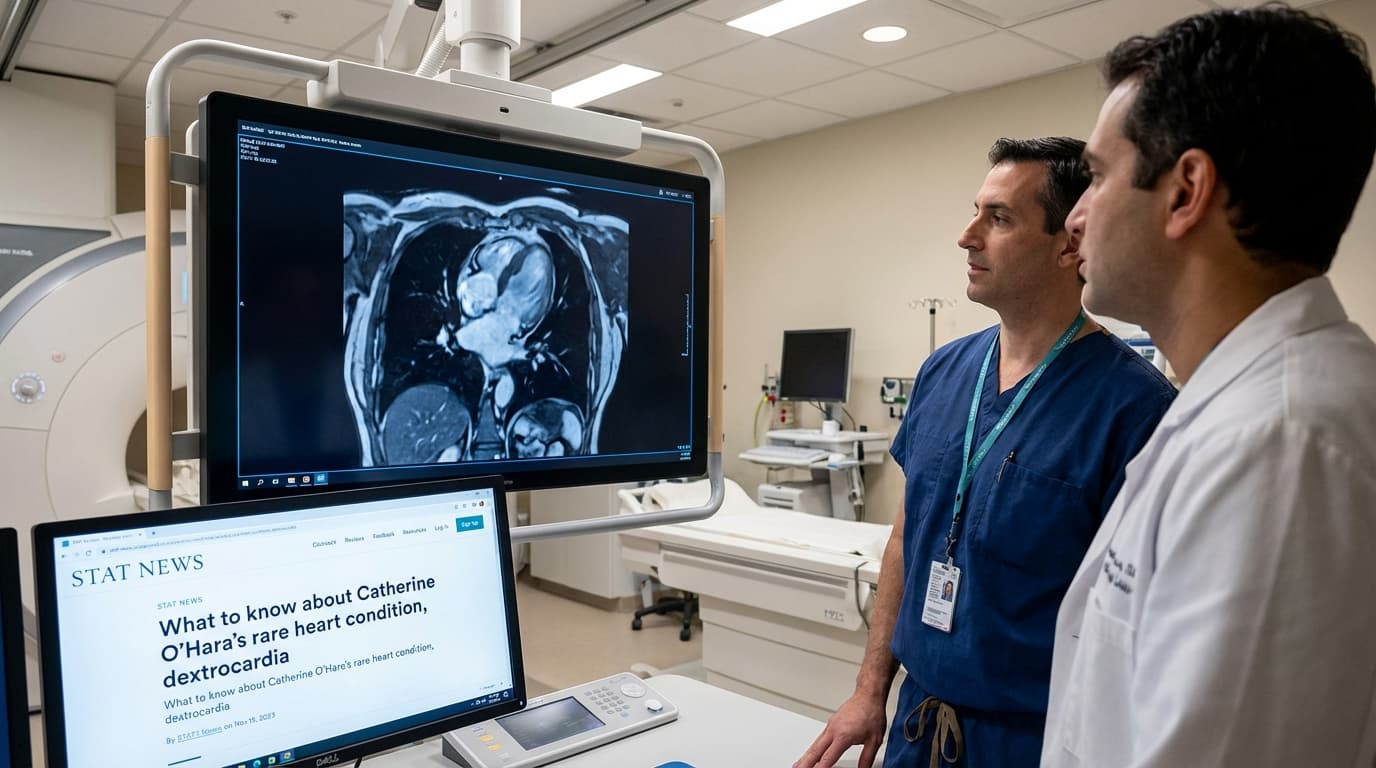
Understanding Dextrocardia: Catherine O’Hara’s Rare Heart Condition and its Medical Significance

Dextrocardia is a rare congenital condition characterized by the heart and organs being reversed from their usual position. While rare, congenital heart defects are common and can vary in severity and impact. This article discusses the clinical perspectives on dextrocardia, its epidemiology, and implications for health.
Understanding Dextrocardia: An Insight into a Rare Heart Condition
Dextrocardia is a rare congenital anomaly where the heart and some or all of the internal organs are positioned as a mirror image of the typical anatomical arrangement. This means the apex of the heart points to the right side of the chest rather than the left, and associated organs may also be reversed in their placement.
Catherine O’Hara and the Spotlight on Dextrocardia
Recently, the condition attracted attention due to reports concerning Catherine O’Hara, a notable individual whose diagnosis highlighted this uncommon disorder. Although individuals with dextrocardia may live normal lives, the condition can sometimes be associated with other congenital heart defects or complications that impact health.
Medical Context and Clinical Features
Dextrocardia falls under the umbrella of congenital heart defects, which are structural issues present from birth. These defects vary widely in presentation and significance. In some cases, dextrocardia occurs with situs inversus, meaning a complete mirror-image reversal of the internal organs, while in others it appears in isolation.
Many people with dextrocardia remain asymptomatic and unaware of the condition until discovered incidentally through imaging studies. However, dextrocardia can associate with other cardiac anomalies that may require clinical attention.
Congenital Heart Defects and Their Prevalence
Congenital heart defects are relatively common, affecting a significant percentage of live births globally. These defects range from minor anomalies to serious malformations requiring surgical intervention. The identification and management of such conditions have advanced considerably, improving outcomes and quality of life.
Diagnostic and Epidemiological Considerations
Advances in medical imaging, including echocardiography and cardiac MRI, have facilitated the accurate diagnosis of dextrocardia and associated conditions. Understanding the epidemiology helps clinicians evaluate incidence rates and potential risk factors.
Implications for Patients
Individuals diagnosed with dextrocardia require tailored medical assessment to determine any associated defects and appropriate management strategies. In many cases, routine monitoring suffices, but complex cases benefit from specialized cardiac care.
Conclusion
Dextrocardia is a fascinating and rare heart condition that underscores the complexity of congenital abnormalities. The case of Catherine O’Hara has brought renewed attention to this disorder, emphasizing the importance of awareness and ongoing research in congenital heart diseases.
Source: STAT News - What to know about Catherine O’Hara’s rare heart condition, dextrocardia
Join the BioIntel newsletter
Get curated biotech intelligence across AI, industry, innovation, investment, medtech, and policy—delivered to your inbox.